When Furniture Becomes an Experience
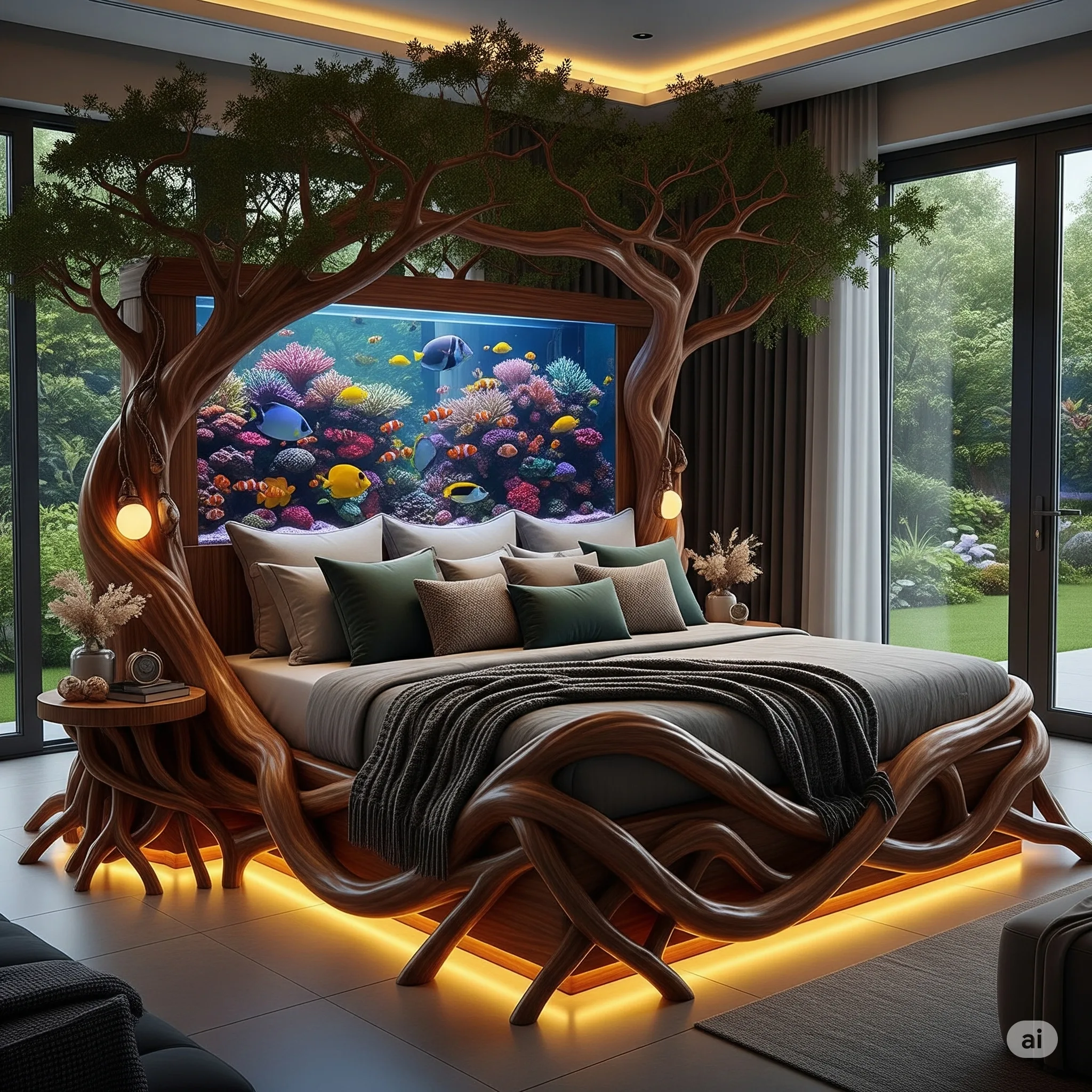
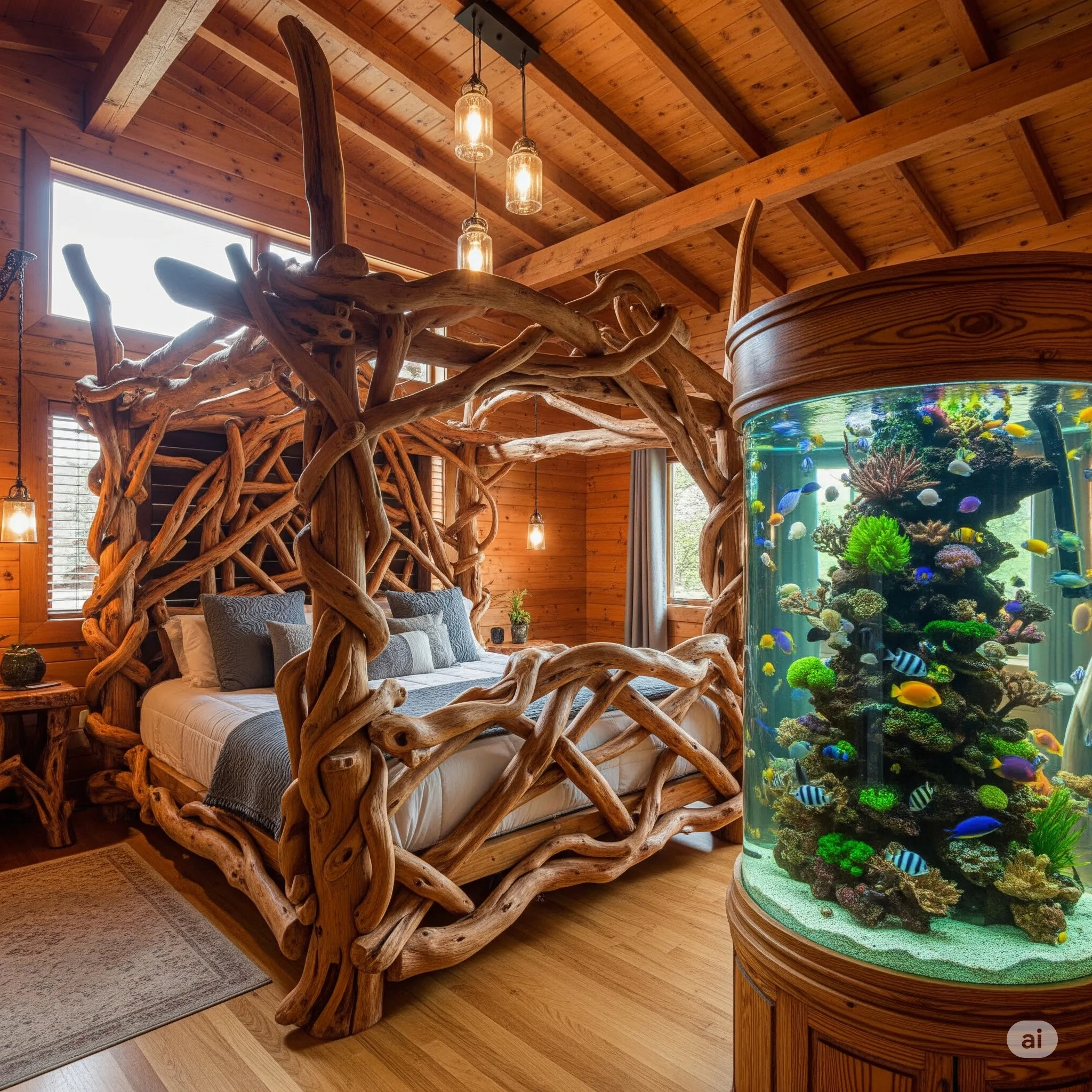
A wooden aquarium bed is a hybrid of furniture design, interior aquascaping, and experiential living: a sleeping platform that integrates an aquarium—either beneath the mattress, as a headboard, or as a sculptural in-frame element—framed and finished in wood. At first mention it sounds like a novelty, but the appeal runs deeper. A wooden aquarium bed fuses the warmth and tactility of timber with the slow-motion, meditative life of an aquatic ecosystem. The result is a piece of furniture that performs multiple roles simultaneously: it is a place to sleep, a living artwork, an ambient light source, and a wellness tool. For homeowners who prioritize calm, for designers seeking a singular focal point, or for boutique hotels aiming to create unforgettable guest suites, the wooden aquarium bed is both the perfect and the unique choice because it quietly rewires how we experience rest, intimacy, and the domestic stage. This long-form article will explore what wooden aquarium beds are, why they matter, how they are built and maintained, the trade-offs involved, and how to choose or commission the right one for your life and space.
The Idea and the Meaning: Why Combine Wood, Water, and Sleep?
The combination of wood, water, and sleep is not random; each element carries symbolic and physiological resonance. Wood is warm, insulative, and rooted—materially and emotionally associated with shelter, stability, and natural textures that soothe. Water, in the form of an aquarium, introduces living motion—fish, plants, and microbubbles that enact gentle, cyclical choreography. Scientific literature links aquariums to stress reduction, lower heart rates, and improved attention; watching fish swim has measurable calming effects, useful in bedrooms where the nervous system is meant to downshift. Sleep benefits from a stable circadian environment, and an aquarium provides soft, diffuse illumination and a predictable soundscape (filtered trickles, gentle aeration) that can function as a modern lullaby. A wooden aquarium bed, therefore, does more than look beautiful: it scaffolds ritual, nurtures calm, and creates a tactile, sensory setting that invites slower evenings and more restful nights. The psychological value—turning the bed into a sanctuary rather than only a utilitarian object—explains why people describe branded or custom beds of this sort as life-changing, not merely decorative.
Design Variations: Headboard Aquariums, Under-Bed Tanks, and Framed Ecosystems
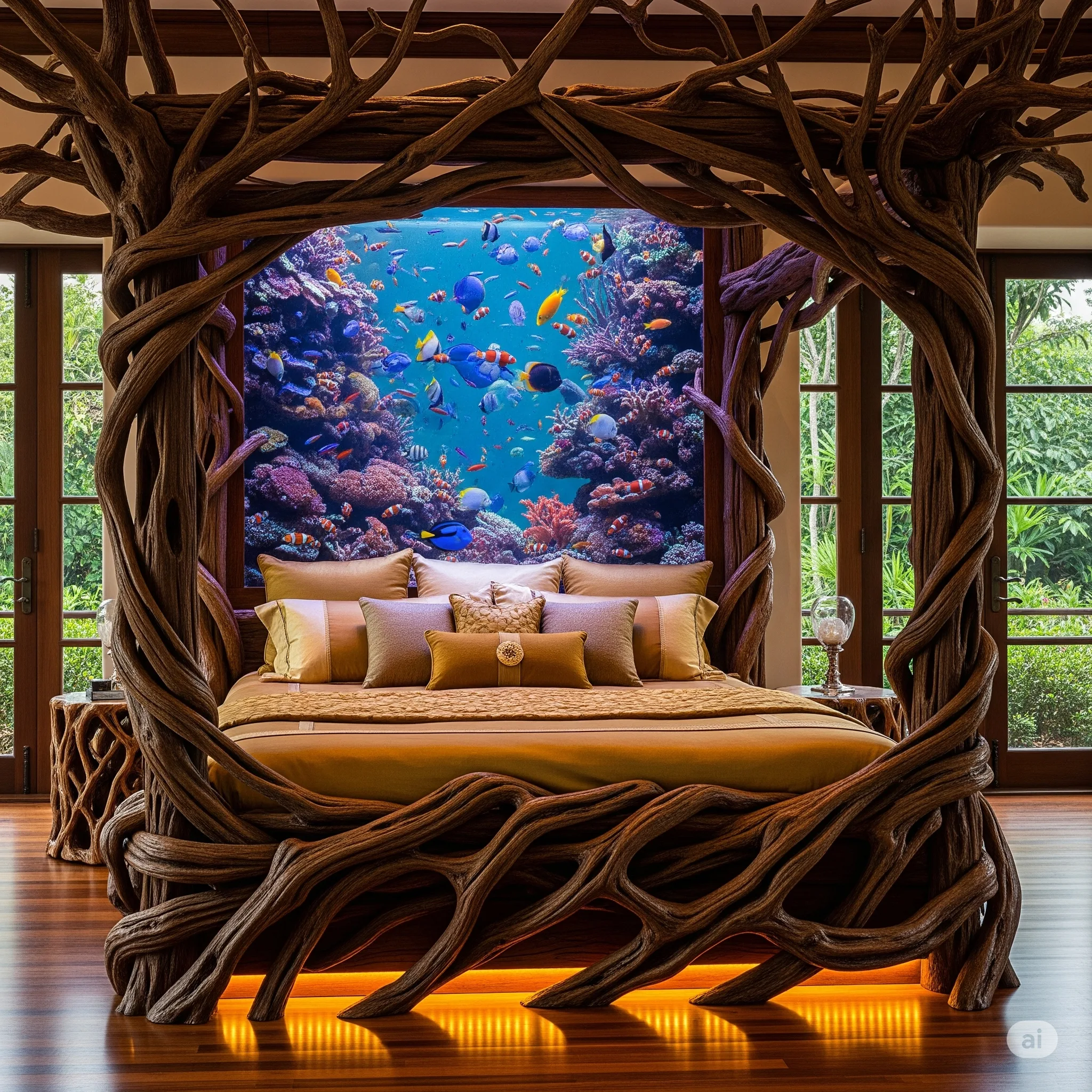
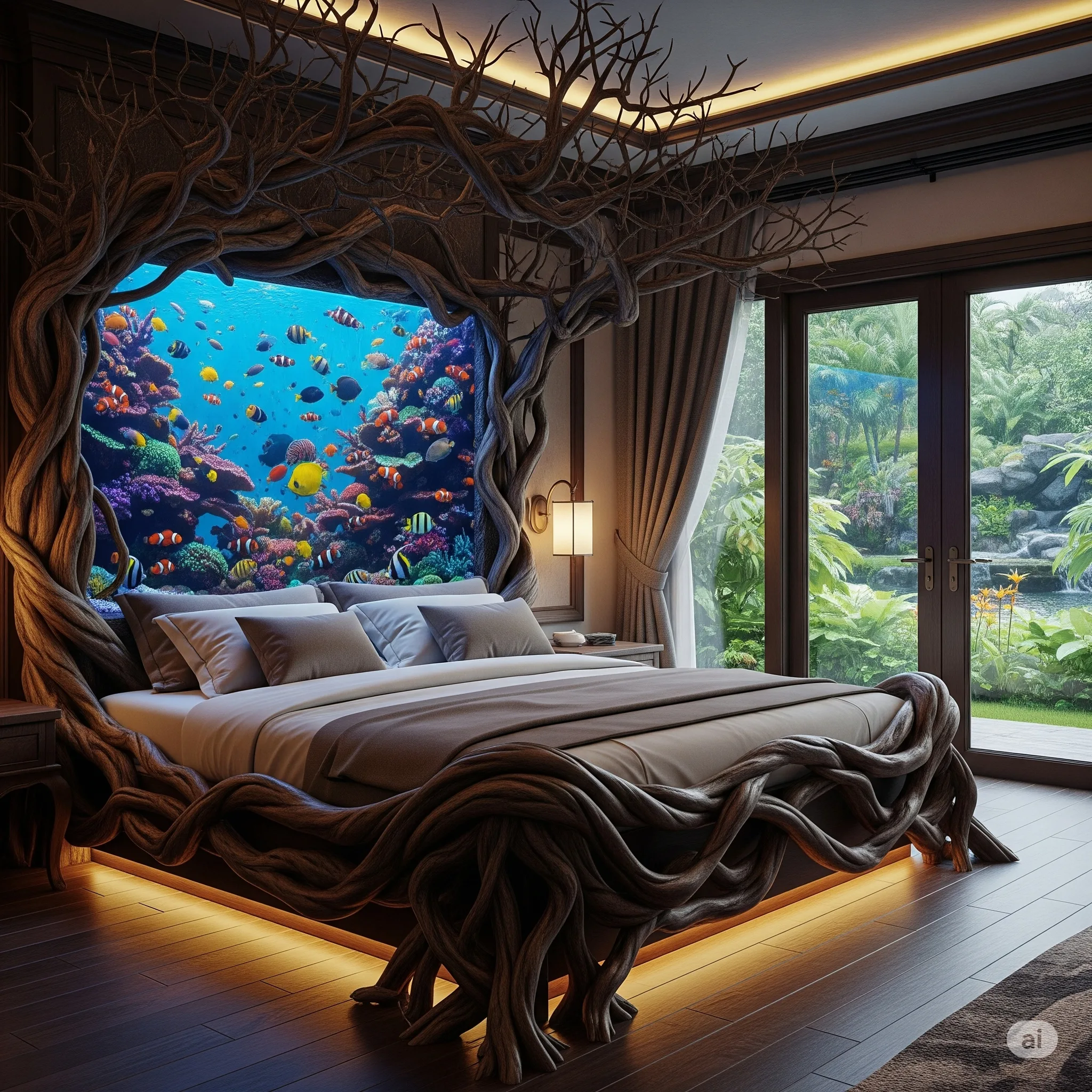
Wooden aquarium beds come in multiple typologies, each with different aesthetic, technical, and maintenance implications. The headboard aquarium integrates a tank vertically behind the pillow zone; it reads like living art on awakening and makes the bed visually lighter by lifting gaze upward. The under-bed aquarium places a horizontal tank beneath a raised mattress platform; from a design standpoint it creates a mysterious, aquarium-glow under the bed that feels cinematic and otherworldly. The framed or inset aquarium builds the tank into the bed’s side rails or footboard as a horizontal or vertical prism—this can be particularly striking in floating bed designs where the aquarium visually levitates the frame. Hybrid solutions combine multiple small tanks—micro-reef panels within a broader wooden frame—producing a mosaic of miniature ecosystems. Choosing among these options depends on desired intimacy (headboard is face-to-face close), maintenance convenience (under-bed tanks can be harder to access), and structural constraints (weight, plumbing access, and service panels).
Materials and Timber Choices: Matching Beauty with Durability
When wood frames interact with a wet environment, material selection is critical. The keyword is stability and compatibility: the best wooden aquarium beds typically combine a proven timber species with construction methods that manage moisture and weight. Common timber choices include teak (highly rot-resistant, oily, and dimensionally stable), cedar (lightweight and aromatic), oak (robust and classic), and engineered woods such as marine-grade plywood or laminated hardwoods that reduce movement in changing humidity. Exotic timbers like walnut or mahogany offer luxury tones but require careful sealing. Many designers prefer an approach where the structural core—platforms, ribs, and supports—is built from engineered, stable materials and the visible cladding is fine wood veneer or solid wood trim. This way you get wood’s aesthetic warmth while mitigating shrink-swell problems. Hardware must be stainless steel or brass to avoid corrosion. A high-quality finish (marine varnishes, polyurethane with UV stabilizers, or specialized penetrating oils adapted for interior use) protects the wood visually and functionally, but importantly the design must avoid direct, continuous wood exposure to splashes or condensation by placing the aquarium in a liner or behind a sealed glass barrier.
Tank Types: Glass vs. Acrylic, Custom Shapes, and Liner Solutions
The aquarium itself is the technical heart of the bed. Two primary tank substrates are available: glass and acrylic. Glass is scratch-resistant, chemically stable, and easy to clean; large flat panels, however, are heavy. Acrylic is lighter and more impact-resistant and allows for complex, curved geometries but scratches more easily and can discolor with time if low-quality. For wooden aquarium beds, acrylic often wins when shapes are non-rectilinear or when weight savings are essential for certain bed platforms. Industry-standard thickness calculations must be followed: tanks with larger surface areas (e.g., under-bed panes) require thicker material or structural stiffeners. Many custom builders create double-walled liners—a fully sealed inner tank made of glass or acrylic and an outer wooden shell that frames and defines the visual experience. This hybrid approach isolates water from wood and makes maintenance safer; if a leak occurs, the secondary containment prevents catastrophic water spread. Another tactic is to mount the tank on a metal or composite cradle and leave the wooden frame as purely cosmetic—this decoupling is clean and service-friendly. No matter what you choose, plan for access panels, overflow and drain routing, and pump access.
Structural Engineering and Load Considerations: The Weight of Water
A major engineering consideration is the weight of water: one gallon is approximately 8.34 pounds (3.78 kg). A modest 100-gallon tank therefore adds over 830 pounds (376 kg) before adding gravel, rockwork, cabinetry, or inhabitants. A wooden aquarium bed must be conceived not as lightweight furniture but as a structural installation: the subfloor or joists under a bedroom must be rated to host the distributed and point loads. Designers generally recommend placing large tanks on ground-floor rooms or engineered floors, reinforcing the substructure with sistered joists or a poured concrete pad under the feet. For floating platforms, incorporate hidden steel cross members or laminated beams engineered for bending and shear loads. The aquarium support frame should transmit load to multiple points rather than to a single brittle glue joint. Commissioning a structural engineer for large or integrated under-bed installations is a prudent step; for headboard aquariums, weight distribution is easier but still requires strong anchorage to studs and earthquake straps in seismically active zones.
Plumbing, Filtration, and Equipment Placement: Making Service Easy
A functional aquarium depends on a quietly humming suite of equipment—filters, pumps, heaters, lights, skimmers—so decision-making about where to place these systems is central. Concealment is possible: many wooden aquarium beds hide canister filters, sumps, and controllers in drawers, side cabinets, or under-deck service compartments. A sump (an auxiliary tank that houses mechanical, biological, and chemical filtration) is advantageous for larger systems and can be placed remotely—under the bed if space allows—or in adjacent cabinetry. Plumbing should use flexible, serviceable fittings (quick-disconnect unions) to simplify winterization or maintenance. Electric supply needs GFCI-protected circuits and ideally surge-protected outlets dedicated to aquarium equipment. Lighting control (dimmers or programmable timers) should route to a user-friendly switch panel integrated into the bed frame or a wireless control system. Noise dampening is important: use vibration-isolating mounts and mufflers to keep pumps and fans unobtrusive; the goal is to enhance rest, not disturb it.
Water Chemistry, Ecology, and Choosing Fish or Aquatic Plants
Not all aquariums are equal ecologically. Decide early if the bed will host a freshwater planted tank, a community fish aquarium, or a saltwater reef environment. Freshwater planted tanks with hardy species (tetras, rasboras, small gouramis) are lower maintenance and exude a calming green palette. Saltwater reef tanks are spectacular—the corals and reef fish produce vibrant color—but they demand higher technical rigor, more expensive equipment, and continuous maintenance. Consider bioload (how much waste the inhabitants produce), stocking levels, and compatibility. Live plants can be allies: they stabilize water chemistry and sequester nitrates. For bedrooms, choose species that tolerate lower light or dimmed cycles; avoid highly territorial or noisy fish species (some cichlids are aggressive). Consult an aquarist when planning and opt for conservative stocking: the smaller the margin for error, the more resilient and restful the aquarium will be.
Health and Sleep Considerations: Lighting, Sound, and Circadian Rhythms
The bedroom is a sanctuary for sleep, so the aquarium’s light and sound must support sleep hygiene. Avoid bright, blue-heavy lights late at night because they can suppress melatonin production; instead, program lights to simulate dusk/dawn transitions and use warm, low-intensity evening lighting. Consider moonlight LED modes that produce soft blue glows without stimulating wakefulness. For sound, filtration hum can be white-noise beneficial for some sleepers but irritating for others; select quiet, low-RPM pumps or install acoustic dampers and soft tubing. The aquarium can become an intentional circadian companion: timed lights can gently wake occupants with a faux sunrise, or soundscapes (water trickle or gentle aeration) can be modulated to support sleep onset. However, never let aquarium lighting replace natural morning light exposure for circadian entrainment—use it as an augment, not a substitute.
Maintenance Realities: Daily, Weekly, and Monthly Tasks
Owning a wooden aquarium bed is a lifestyle commitment. Daily checks include surface skimming, temperature confirmation, and a glance at equipment operation. Weekly tasks commonly involve water testing (ammonia, nitrite, nitrate, pH), partial water changes (10–20% for many freshwater tanks), algae removal, and filter cleaning. Monthly checks may include cleaning the sump, inspecting plumbing unions, and adjusting chemical dosing if required. For under-bed tanks or framed aquaria, access panels should be engineered for easy removal; avoid designs that force full disassembly for routine maintenance. Consider contracting a local aquarium service for periodic deep cleans or when going on extended travel. The payoff is significant: a well-maintained aquarium remains clear, healthy, and predictable—exactly what you want in a bedroom environment.
Safety and Risk Management: Leak Containment, Electrical Codes, and Insurance
The specter of leaks and electrical mishaps is real, but manageable. Best practices: include secondary containment (trays that can hold a full tank volume under the aquarium), leak detection sensors that send smartphone alerts, and GFCI-protected circuits. For installations above living spaces, design a catchment system that channels overflow into a floor drain. Electrical wiring for pumps, heaters, and lights must meet local code—use licensed electricians. Disclose large installations to your property insurer; they may require proof of professional installation and certain safety devices to maintain coverage. For earthquake-prone regions, strap tanks to structural frames and use flexible connections to reduce breakage risk. With thoughtful planning, the risks are minor compared to the aesthetic and psychological benefits.
Aesthetics & Interior Styling: Making the Aquarium Bed Harmonize with the Room
A wooden aquarium bed is a focal point; treat it as an interior architecture element. Match wood tone to other key finishes—flooring, wardrobe, or nightstands—to create a cohesive palette. Choose aquarium backgrounds (rockwork, aquatic plants, sand) that complement textiles and soft goods rather than battle them for attention. Lighting can be tuned for evening ambience; RGB LEDs allow complete color control but avoid garish hues that undermine calm. For minimal interiors, a low-profile under-bed aquarium reads like a subtle glow; in eclectic or bohemian spaces, a vertical planted aquarium headboard becomes a lush living wall. Accent with natural textiles—linen, wool, cotton—and soft bedside lighting to balance the aquarium’s reflective surfaces. The goal is synergy: the wooden frame warms and tethers the water element, making the bed feel both engineered and humane.
Sustainability and Ethical Considerations: Choosing Responsible Materials and Livestock
Be mindful of ecological impact: select sustainably sourced wood (FSC-certified), reclaimed timber, or engineered composites with recycled content. For aquatic life, avoid wild-caught species with vulnerable populations; many beautiful aquarium fish are captive-bred and adapt better to home tanks. Choose energy-efficient equipment—high-efficiency pumps and LED lighting—to lower ongoing energy consumption. If heating is required, consider heat-recovery approaches where aquarium heater waste warms adjacent spaces (with proper engineering). Responsible design choices preserve the delight of a wooden aquarium bed without compromising environmental stewardship.
Cost, Value, and Long-Term Investment
Prices vary widely. A simple headboard aquarium with a modest tank and basic filtration could be installed for a few thousand dollars. A fully integrated under-bed reef system with custom cabinetry, professional plumbing, and lighting control can reach into the tens of thousands. Value is not merely financial: the experiential ROI—sleep quality, reduced stress, the unique character of a room—often converts a high upfront cost into long-term satisfaction. When calculating total cost of ownership, include professional installation, increased electricity, water, ongoing maintenance supplies, and eventual filter and pump replacements. For hospitality or property staging, the investment often yields marketing dividends: photographic rooms and memorable stays translate to higher rates and bookings.
Buying vs. Commissioning: Off-the-Shelf Options and Custom Makers
Off-the-shelf aquarium headboards and kits exist for DIYers and lighter integrations. These are less expensive but limited in scale and aesthetic finesse. Custom shop fabrication—typically involving a furniture maker, marine glazier, and professional aquarist—delivers bespoke scale, materials, and technical resilience. Commissioning a maker ensures proper structural engineering, water-tightness, and a tailored maintenance plan. For buyers less comfortable with aquarium ecology, include a local aquarium service in the contract to handle startup cycling, stocking, and first-year maintenance; many professionals provide a warranty and hands-on training for the client.
Common Mistakes and How to Avoid Them
Mistakes include underestimating weight, choosing poor-quality wood finishes, skipping a sump or secondary containment, inadequate plumbing access, and overstocking the aquarium. Avoid these by working with experienced fabricators, insisting on metal or composite cradles rather than cantilevered wood supports, and planning a fail-safe for leaks. If you travel frequently, install automation for dosing and include an easy remote monitoring system. Be honest about how much time you will dedicate to maintenance and choose an ecosystem type aligned with that availability.
Case Studies and Inspirational Examples
A boutique hotel in Kyoto integrated cedar headboard aquaria with minimal shrimp and plant tanks, delivering quiet mornings and high guest reviews for restful suites. A modern loft in Brooklyn installed an under-bed acrylic tank with a planted freshwater landscape; the effect was cinematic, with morning light turning through water into rippled shadows on ceilings. A design studio commissioned a walnut-framed bed with three small vertical aquaria acting as living art; the bedroom became a studio favorite for client meetings and portrait photography. These examples show range—from rustic and meditative to urban and sculptural—demonstrating that wooden aquarium beds translate across cultures and interiors.
FAQs: Quick Answers for Common Questions
Is sleeping next to an aquarium safe? Yes—if lighting, sound, and electrical systems are properly designed and equipment is GFCI-protected. Will the moisture harm the wood? Not if tanks are double-lined or placed in sealed housing and ventilation controls humidity. How much maintenance is required? Plan for daily visual checks, weekly small water changes, and monthly equipment checks; professional service is advisable annually. Can I have a reef bed? Technically yes, but saltwater reefs are demanding and better suited for homeowners committed to regular advanced care or hospitality operations with staff. Do these beds increase insurance premiums? Potentially—inform your insurer and document professional installation and mitigation devices.
A Nighttime Sanctuary That Tells a Story
A wooden aquarium bed is the perfect and unique choice for anyone who treats their interior as a living narrative—with furniture that is both functional and poetic. It demands thoughtful planning, technical competency, and a willingness to maintain living systems, but in return it offers a layered experience: the tactile warmth of wood, the slow-motion choreography of aquatic life, and an ambient, restorative environment that supports sleep and reduces stress. Whether you choose a modest headboard aquarium or commission a grand under-bed reef, the combination of wood and water reframes how a bedroom functions—from place of passive rest to locus of restorative ritual. If you value craftsmanship, sensory design, and a home that tells a personal story each night, a wooden aquarium bed is not just furniture; it is an investment in daily wellbeing and an unequivocally unique centerpiece for modern living.