Where Rustic Charm Meets Outdoor Cooking
Among outdoor cooking enthusiasts, there is a growing desire for equipment that delivers not just flavor but also personality. Tractor BBQ Grills satisfy both in spectacular fashion. Imagine rolling into a backyard gathering or community block party with a grilling rig shaped like a vintage farm tractor—smokestack puffing, wheels gleaming, grates sizzling—then imagine the delighted faces before the first bite is even served. Tractor BBQ Grills are more than appliances; they are mobile experiences that merge culinary performance, mechanical charm, and storytelling into a single, memorable centerpiece. They honor rural heritage, celebrate craftsmanship, and turn every cookout into a show. This article explains what sets Tractor BBQ Grills apart, how to choose or build the right one, and why they truly are the perfect and unique choice for hosts, pitmasters, restaurants, and brands that want to be remembered long after the last embers cool.
What Exactly Are Tractor BBQ Grills?
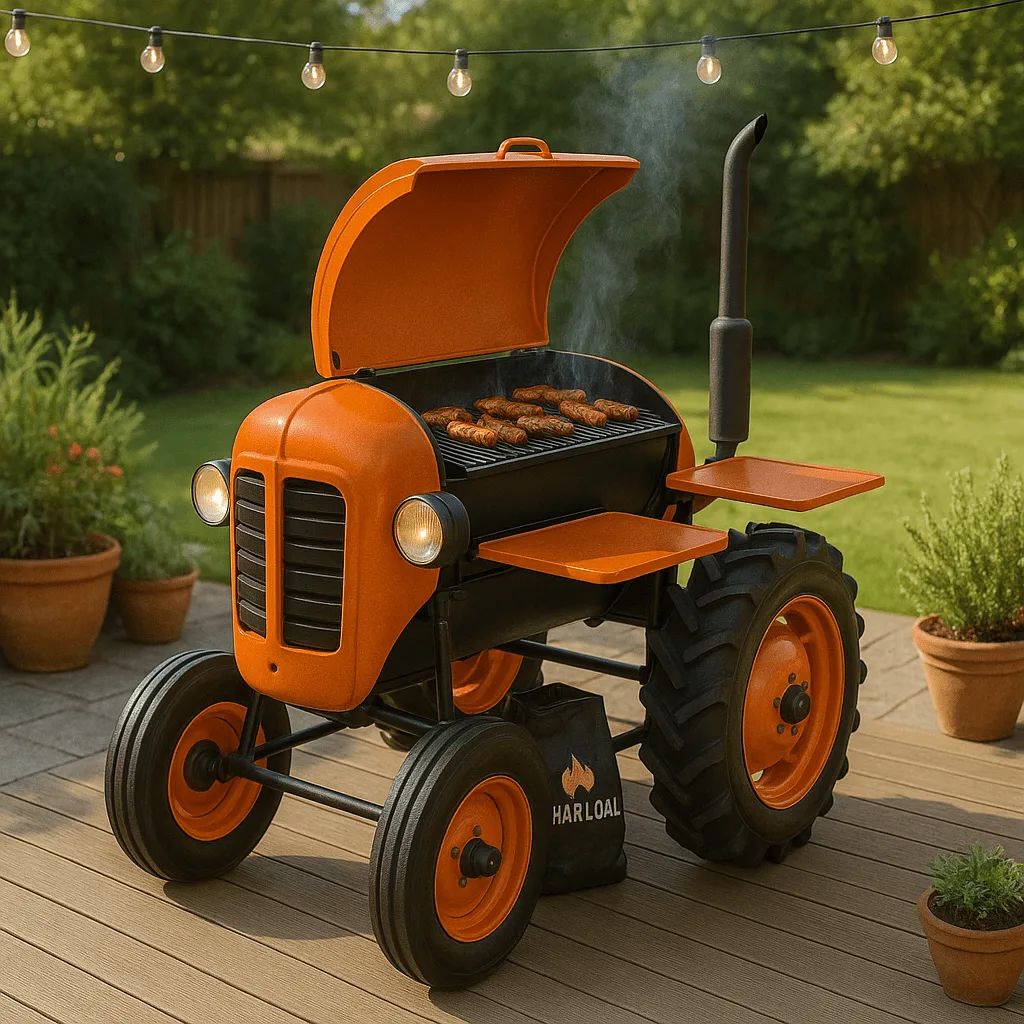
Tractor BBQ Grills are barbecue cookers designed to evoke the look and spirit of a tractor while offering full-featured grilling and smoking capabilities. Some are compact patio models with tractor-inspired bodywork and decorative wheels. Others are full-scale, road-legal trailers that resemble classic farm tractors or modern workhorses, complete with faux hoods, stacks, fenders, and functional lighting. Under the skin, they can be offset smokers, reverse-flow smokers, direct-heat charcoal grills, pellet cookers, gas-and-charcoal combos, or hybrid rigs. The tractor aesthetic is not a gimmick; it is a design language that houses serious cooking hardware—fireboxes, insulated chambers, adjustable grates, heavy-gauge steel, and precise air management—while broadcasting a proud identity rooted in agricultural history and American (and global) maker culture.
Why Tractor BBQ Grills Are the Perfect And Unique Choice
Tractor BBQ Grills deliver layered value: they perform like pro-grade cookers, they magnetize attention, and they tell a story. Performance-wise, builders often use thick steel for stable heat, wide fireboxes for continuous fuel feeds, and baffle systems that smooth airflow. The result is predictable cooking curves for low-and-slow briskets, ribs, and pork shoulders, and searing heat zones for steaks and burgers. From a social perspective, the tractor silhouette functions as a beacon. It invites conversation across generations—grandparents recall fields and harvests, kids climb aboard (safely) to point at wheels and smokestacks, and everyone photographs the spectacle. That visual magnetism compounds practical benefits: a restaurant that parks a tractor-themed smoker outside converts passersby into customers; a caterer gains a portable billboard; a brand sponsors community grilling events and earns earned media without buying ads. The uniqueness is authentic because Tractor BBQ Grills carry cultural resonance—the grit of farming, the romance of machinery, and the communal ritual of barbecue—fused into one unforgettable object.
Design Variations: From Patio Statement to Road-Show Rig
The diversity of Tractor BBQ Grills spans three broad categories. First are compact patio models that keep proportions manageable while retaining tractor cues: a sculpted hood as the lid, stylized wheels as supports, and a vertical stack acting as a functional exhaust. These fit suburban decks and small courtyards yet still look special. Second are mid-size, towable units built on utility frames. They might feature a reverse-flow smoker under a tractor hood and a side grill for direct heat, with fold-out prep shelves and integrated coolers. Third are showpiece trailers that mimic full tractors with cabs, grilles, headlights, painted livery, and large-radius wheels; inside, multiple cook chambers share heat via tuned ducting, enabling parallel service for hundreds of guests. Across categories, creators sometimes incorporate reclaimed tractor parts—grilles from retired machines, steering wheels for damper controls, real tires (or safe metal replicas), and gearstick levers repurposed as latch handles—so each build becomes a functional sculpture.
Materials and Construction: Where Charm Meets Engineering
High-performing Tractor BBQ Grills start with material choices. Heavy-gauge mild steel—often 3/16″ to 1/4″ (about 5–6 mm)—is common for cook chambers because thermal mass stabilizes temperature. Fireboxes benefit from equal or thicker plate to resist burn-through. Stainless steel appears on racks, warming shelves, and fasteners to reduce corrosion. Hinges and latches should be overbuilt; the tractor form encourages large lids and doors, which create torque loads that cheap hardware cannot survive. Welds must be continuous in the cook chamber to seal smoke, while drain ports with high-temp valves simplify cleanup. If the grill is road-towable, frames should be boxed steel with cross bracing, DOT-compliant couplers, lighting, and safety chains (requirements vary by country). Powder coating and high-temp paint protect external surfaces, whereas the inside should season like a cast-iron skillet: thin layers of cooking oil polymerized by heat create a durable, food-safe patina. Finally, the tractor facade—sheet metal hoods, fenders, and grilles—must be structured on stand-offs or secondary frames to avoid warping from cook-chamber heat.
Fuel Types and Heat Systems: Choosing Your Fire
The soul of barbecue is fuel, and Tractor BBQ Grills support multiple fire philosophies. Wood and charcoal are classic for flavor density; oak, hickory, pecan, and fruitwoods deliver distinct smoke profiles. Offset and reverse-flow designs excel with split logs, offering the clean, thin blue smoke pitmasters prize. Charcoal baskets enable longer steady burns with minimal intervention. Pellet systems appeal to operators who want push-button consistency. A pellet-fired Tractor BBQ Grill can hold tight temperature bands for hours, perfect for unattended overnight cooks at festivals. Gas assist—via propane burners in the firebox—can light coal beds quickly and stabilize temperatures on windy days, but most artisans keep gas away from the food path to preserve wood-forward flavor. Hybrid rigs combine a main wood-fired chamber with a separate gas grill or griddle for sides and searing. Whichever path you choose, the tractor body must be engineered with sufficient airflow: inlets sized for the heat source, smooth ducting, and exhaust stacks tuned for proper draw without hot spots.
Heat Management and Cooking Performance: The Science Behind the Spectacle
A Tractor BBQ Grill is a showstopper, but its credibility rests on even temperatures and repeatable results. Builders achieve balance through chamber geometry and baffles. In an offset smoker, heat enters from the firebox and spreads under a diffuser plate before rising across the grates; reverse-flow variants route heat beneath a full-length plate, then up at the far end and back across the meat to exit near the firebox, yielding uniform gradients and stable bark formation. Thermometer placement matters: analog gauges at grate height (not just dome height) tell the truth; digital probes with multi-zone monitoring verify top-to-bottom and left-to-right consistency. Moisture management also counts—some rigs include built-in water pans or humidity rails along the diffuser to moderate the cook environment and prevent dry-out on lean cuts. The tractor silhouette can be an advantage here because the “hood” volume provides height for convection while the “stack” can be sized and dampered to fine-tune exhaust velocity. When properly designed, a tractor-styled pit cooks with the same finesse as any elite smoker while delivering far more presence.
Ergonomics and Workflow: Cooking Comfortably for Hours
Beyond temperature, comfort dictates whether a grill becomes a joy or a chore. Tractor BBQ Grills often feature elevated grates that reduce stooping, wide door openings for easy brisket transfers, and counterweighted lids. Side shelves at food-prep height, cutting-board insets, paper-towel holders, and magnetic tool rails keep workflow tight. Drawers or dry boxes hold rubs and injection gear; hooks manage heat-resistant gloves. Consider the reach to the firebox and the safe path for adding splits. Footprint matters too: at events, you may need to serve from the curb-side of a trailer for safety; design fold-out service counters accordingly. Good rigs include LED task lights under the hood line for night cooks and 12V sockets or inverters to power thermometers and rotisserie motors. The best Tractor BBQ Grills combine the romance of tractor aesthetics with the quiet luxury of thoughtful ergonomics.
Safety, Compliance, and Responsibility
Any grill with real fire demands respect. Tractor BBQ Grills raise visibility and crowd interest, so safety needs scale up accordingly. Fireboxes should have positive-latch doors and insulated handles. Heat shields and guarded gaps prevent accidental contact with hot steel. Wheels must be chocked during use; if the rig is road-towable, it needs rated tires, proper load distribution, fenders, and compliant lighting and reflectors. Keep Class B fire extinguishers within arm’s reach and a metal ash bucket with a tight lid for embers. Observe local codes on open flames, propane storage, and event permits. Never allow riders on the rig while moving, even for short distances. During service, set barriers or stanchions so curious hands don’t wander toward hot surfaces. Responsible operation protects guests and preserves the reputation that Tractor BBQ Grills build so easily.
Mobility and Storage: From Barn to Block Party
One of the joys of Tractor BBQ Grills is mobility. Patio-sized versions roll on casters over decks and pavers, while trailer builds carry the party anywhere. If towing, match the rig’s weight to your vehicle’s capacity and practice slow maneuvers; large tractor silhouettes catch wind. For storage, choose breathable covers that shed rain but allow moisture to escape. If the grill winters in a barn or garage, keep a desiccant or small dehumidifier nearby to mitigate rust; wipe grates with oil, empty ash fully, and crack vents slightly to prevent condensation. Consider removable stacks and bolt-on fenders to reduce height and width if storage space is tight. Mobility also includes serviceability: quick-release pins on shelves, drain valves, and grease channels make cleaning faster after a long day.
Customization and Branding: Make It Unmistakably Yours
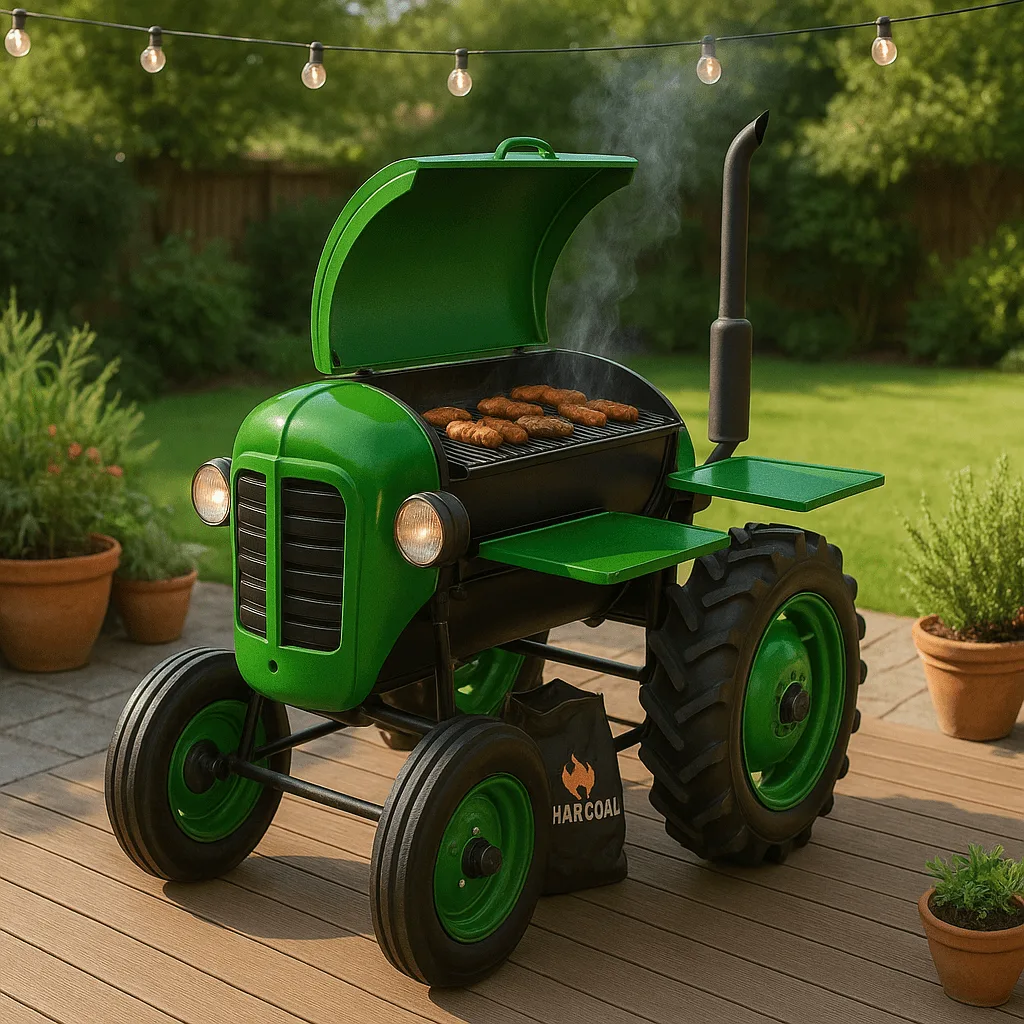
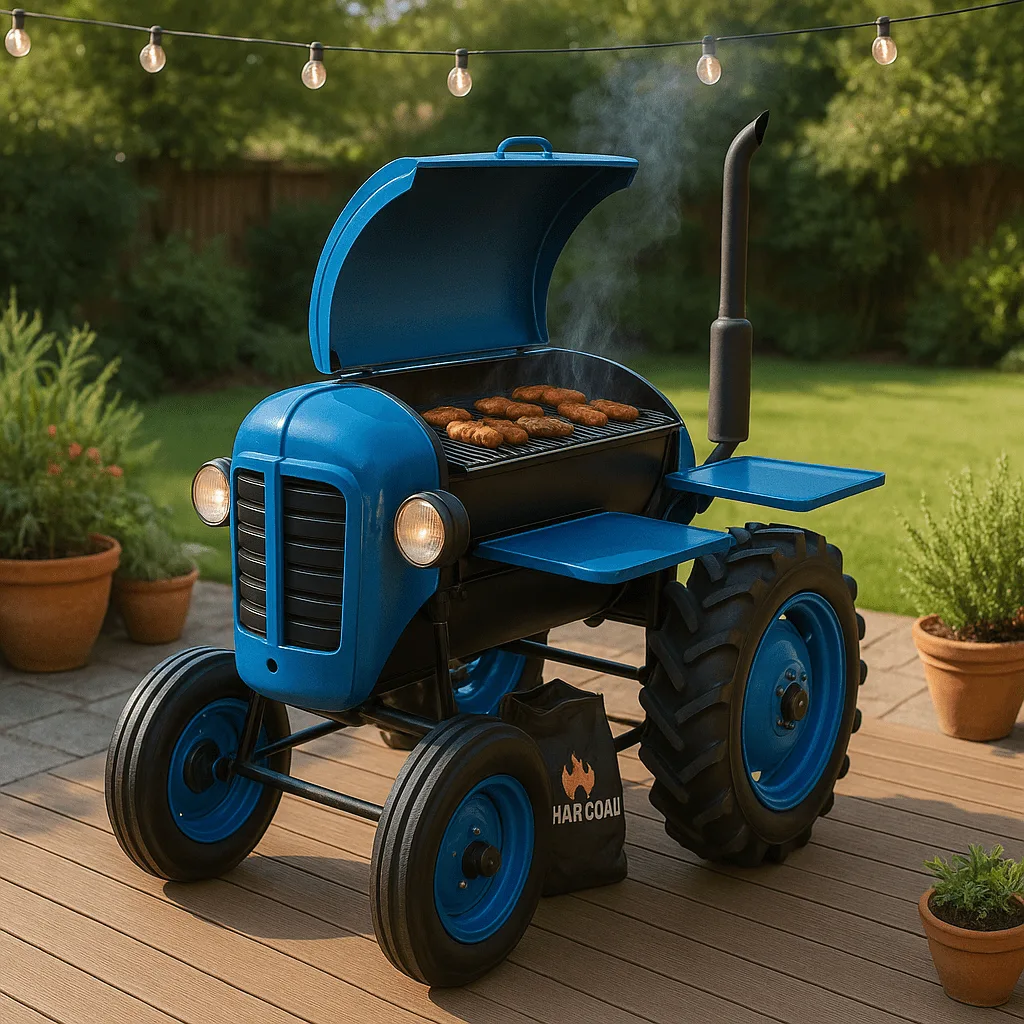
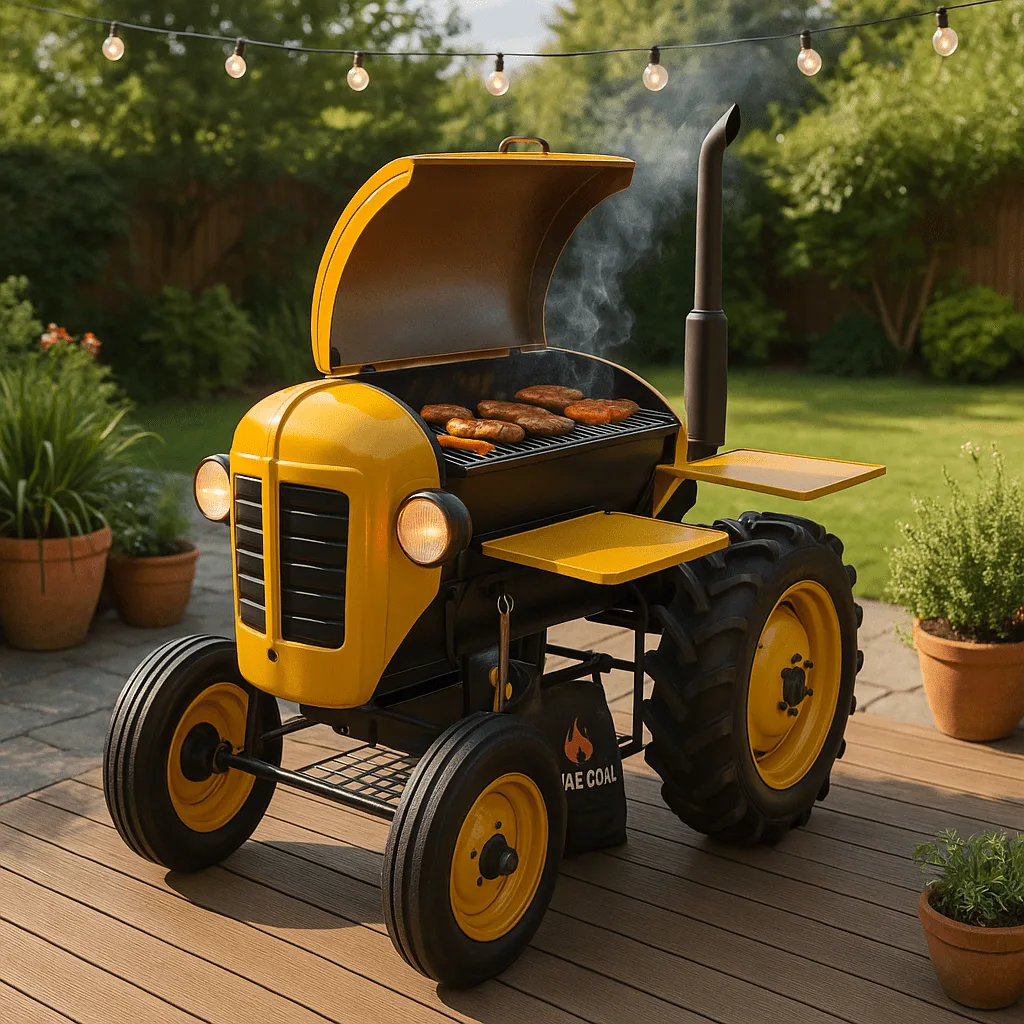
The tractor theme invites personality. Colorways inspired by classic agricultural brands, pinstriped accents, vintage enamel badges, and powder-coated wheels give instant identity. Fabricators can laser-cut your farm or company name into a backlit grille, shape the hood profile to mimic a beloved model, or wrap panels with weatherproof graphics. Add a sound system for ambiance, a fold-out marquee for shade, or a chalkboard menu built into the side panel. For commercial operators, Tractor BBQ Grills act as rolling billboards; QR codes on fenders link to menus; a rooftop flag flies during events; LED edge lighting turns evening service into a stage. The more distinctive the rig, the stronger the word-of-mouth—and the more repeat bookings you’ll enjoy.
Use Cases: From Family Gatherings to Festival Service
Tractor BBQ Grills shine in diverse contexts. At home, they transform birthdays and holidays into themed experiences that families remember. For farms and agri-tourism venues, a tractor-styled smoker aligns perfectly with the landscape and mission—field-to-table becomes grill-to-plate. Caterers leverage the visual draw to anchor weddings, fundraisers, and corporate picnics; the grill becomes the photo booth, conversation hub, and serving station all at once. Breweries and taprooms host tractor-smoker pop-ups to pair smoke with stout and lager. Municipal events—county fairs, harvest festivals, heritage days—embrace Tractor BBQ Grills as living exhibits of mechanical art and culinary craft. Wherever people gather outside, this grill catalyzes community.
Outdoor Kitchen Integration: Blending the Tractor with Built-Ins
Some owners want a permanent setting that still highlights the tractor character. You can park a patio-scale tractor grill into a masonry surround, leaving wheels and hood visible while tying utilities and counters into stonework. Build a prep island with cold storage opposite the tractor to create a U-shaped workflow. Use pavers patterned like farm fields to echo the theme; install low-voltage path lights that imitate marker lights on a tractor. For smoke management in semi-enclosed spaces, ensure ample clearance to combustibles and install a rated vent hood if necessary. The goal is harmony: the tractor should look like it belongs while retaining the freedom to roll out for deep cleaning or seasonal rearrangement.
Maintenance and Longevity: Keeping the Iron Happy
Good care multiplies the lifespan of Tractor BBQ Grills. After each cook, scrape grates while hot, then oil lightly to prevent rust. Empty ash when fully cold; ash absorbs moisture and accelerates corrosion if left in the firebox. Inspect weld seams and hinge pins seasonally; a dab of high-temp grease on hinges and latches preserves smooth action. Touch up paint chips with high-temp coating to seal bare steel. Replace gaskets on insulated doors when they compress or fray. Pellet rigs need auger and burn-pot cleaning; offsets benefit from brushing the diffuser and checking for soot buildup near the stack inlet. If the grill lives near the coast, rinse with fresh water after salty events and dry thoroughly before re-oiling internals. Treat your Tractor BBQ Grill like a vintage machine—routine attention gives it decades of service.
Sustainability and Resourcefulness
Tractor BBQ Grills can reflect sustainable values. Reusing tractor parts keeps metal out of scrap yards and imbues the build with benign “embedded history.” Choosing locally sourced hardwoods reduces transport emissions; pellet users can opt for food-safe pellets with no fillers. Well-built steel rigs last for generations, which is sustainability by longevity. For events, bring reusable serving ware, compostable trays, and a waste-sorting station alongside the grill; the tractor theme already celebrates land and labor—aligning the operations with that ethos completes the circle.
Budget, Value, and Return on Experience
Costs range widely. DIY conversions with reclaimed parts can keep budgets modest, while custom trailer builds with show-level finishes command premium pricing. Where does the value come from? First, cooking performance: thick steel, tight seals, and engineered airflow shorten learning curves and reduce wasted fuel. Second, durability: a properly coated and maintained rig resists rust and holds resale value. Third, experience ROI: Tractor BBQ Grills earn attention that standard grills do not. For a caterer, a single high-profile event can repay the difference through bookings and social buzz. For families, the return is measured in memories—children and guests will ask for “the tractor grill” by name every time.
Buying (or Building) Checklist for Tractor BBQ Grills
Clarify your goals: home entertaining, commercial catering, or brand promotion. Measure storage and towing capacity. Decide on cooking style—offset smoking for deep barbecue flavor, pellet convenience for precision, or a hybrid for versatility. Confirm material specs: at least 3/16″ cook-chamber steel for thermal stability, robust hinges and counterweights, stainless grates. Inspect airflow design: adjustable intakes, well-placed exhaust, and diffuser plates for even heat. Evaluate ergonomics: shelf height, door swing, tool storage, lighting, grease management. Verify safety: cool-touch handles, guards for hot areas, stable stance, and compliant trailer hardware if towable. Consider customization: color, graphics, lighting, and branding elements. Assess maintenance access: clean-out doors, drain valves, removable grates. Request a shake-down cook or temp-map if possible to validate performance before you commit.
Common Mistakes to Avoid
Don’t choose style over substance. A dramatic tractor silhouette cannot compensate for thin steel, leaky doors, or poor airflow. Avoid underestimating weight; heavy rigs demand appropriate tow vehicles and strong patios. Don’t ignore fuel alignment—if you love the ritual of split logs, a pellet-only unit may frustrate you; if you want overnight turn-key cooks, a pure offset might test your stamina. Resist cluttering the rig with too many bolt-ons at the start; begin with essential features and add as needs emerge. Finally, do not skip safety planning—rope off hot zones at public events and keep extinguishers visible, not hidden.
Flavor and Technique: Getting the Most from Tractor BBQ Grills
Tractor BBQ Grills excel at both low-and-slow and hot-and-fast cooking. For classic barbecue, aim for 225–275°F (about 107–135°C) with clean-burning fires; preheat thoroughly so thick steel stabilizes before meat goes on. Position briskets point toward the hotter firebox side, rotate once if your temp map suggests a gentle gradient, and catch drippings in shallow pans to reduce flare-ups. For ribs, let the chamber’s convection do the work; the reverse-flow in many tractor rigs produces even bark without excessive spritzing. When it’s time to sear, open baffles or move to a dedicated direct-heat zone; cast-iron grates or planchas laid over the tractor’s “front deck” deliver crusts on steaks and smash burgers that wow a crowd. Use the smokestack like a throttle: subtle damper changes make minute flavor adjustments. Above all, trust your senses—smell for clean smoke, listen for fire crackle, and peek for moisture sheen; Tractor BBQ Grills communicate as clearly as they perform.
Hosting and Presentation: Turning Service into Theater
Presentation multiplies the tractor magic. Stage the rig where guests can see plumes lifting from the stack and hear lids hiss as they open. Hang a menu board from the fender, place condiment caddies on a “tool tray,” and present slices of brisket on butcher paper over a tractor-red serving board. Play a curated playlist that nods to farm life and highway travel. At dusk, underbody LEDs or stack uplights make the rig glow. Offer a “kids’ pit tour” with cold-only areas designated for learning about airflow and fire safety. In commercial settings, capture emails via a QR code on the hood for future events. The goal is to translate the mechanical charm of tractors into hospitality—every detail becomes part of the narrative.
Case Studies in Spirit (Imagined but Instructive)
Consider a family in a rural suburb who installs a patio-scale Tractor BBQ Grill painted in the colors of the grandfather’s old tractor. Every Sunday, three generations gather, swapping stories over ribs that taste of oak and time; the grill becomes a living memorial that binds the family together. Picture a brewery that commissions a towable tractor smoker. On release days, the rig parks at the entrance, the stack puffing gently as customers arrive; sales spike, social media fills with images, and the brand becomes synonymous with good times and smoke-kissed food. Envision a farm-to-table restaurant that places a tractor smoker by the roadside. Tourists pull over for photos, then stay for pulled pork and cobbler; the grill converts curiosity into revenue, embodying the phrase “the perfect and unique choice” in business terms.
Frequently Asked Questions About Tractor BBQ Grills
Are Tractor BBQ Grills harder to use than regular smokers? Not inherently. Under the tractor skin is a standard smoker or grill; once you learn its airflow and fuel habits, operation is familiar. Can I tow a tractor-themed rig on public roads? Many can, provided they meet local trailer regulations—lights, brakes if required, and weight ratings. Check your jurisdiction and the builder’s specifications. Does the tractor shape trap heat or cause hot spots? Good builds design airflow carefully with diffusers and tuned stacks; ask for temperature mapping or reviews before buying. What fuel should I choose? If you love traditional barbecue flavor and hands-on fire tending, stick with wood or charcoal. If you need push-button consistency for catering, consider pellets or a hybrid. How do I keep it looking great? Clean after each cook, season internal steel, touch up chips, and store covered. Treat it like a prized machine. Can I add a griddle, fryer, or pizza attachment? Yes, many builds include modular rails and auxiliary burners; plan gas routing and safety clearances with your fabricator. Is a Tractor BBQ Grill worth the investment for a business? For many, yes—the visual pull drives traffic, social sharing, and bookings that standard rigs struggle to generate.
The Emotional Core: Heritage, Ingenuity, Community
Part of the magic of Tractor BBQ Grills is emotional. They blend the heritage of farming with the ingenuity of fabrication and the community ritual of barbecue. They remind us that food and machines both tell human stories—of work, weather, patience, skill, and celebration. When the stack exhales and the lid lifts, we feel kinship with makers who turn raw materials into joy. That is why the impact of these grills lasts beyond the meal; they seed traditions that children will remember and repeat.
Conclusion: Why Tractor BBQ Grills Truly Are the Perfect And Unique Choice
In a market crowded with competent but forgettable cookers, Tractor BBQ Grills stand apart as instruments of flavor and vehicles of meaning. They deliver professional-grade performance with thick steel, tuned airflow, and ergonomic layouts; they serve as irresistible visual anchors that transform any gathering into an event; and they honor the dignity of tools and the romance of the open air. Whether you are a home host seeking unforgettable weekends, a caterer building a brand, or a venue looking for a signature attraction, Tractor BBQ Grills offer a complete package of utility, identity, and delight. Choose the fuel system that fits your style, confirm the build quality beneath the paint, plan for safety and workflow, customize the tractor look to tell your story—and then light the fire. The first time guests turn the corner and see that tractor silhouette breathing smoke, you will understand in your bones why this is the perfect and unique choice.