
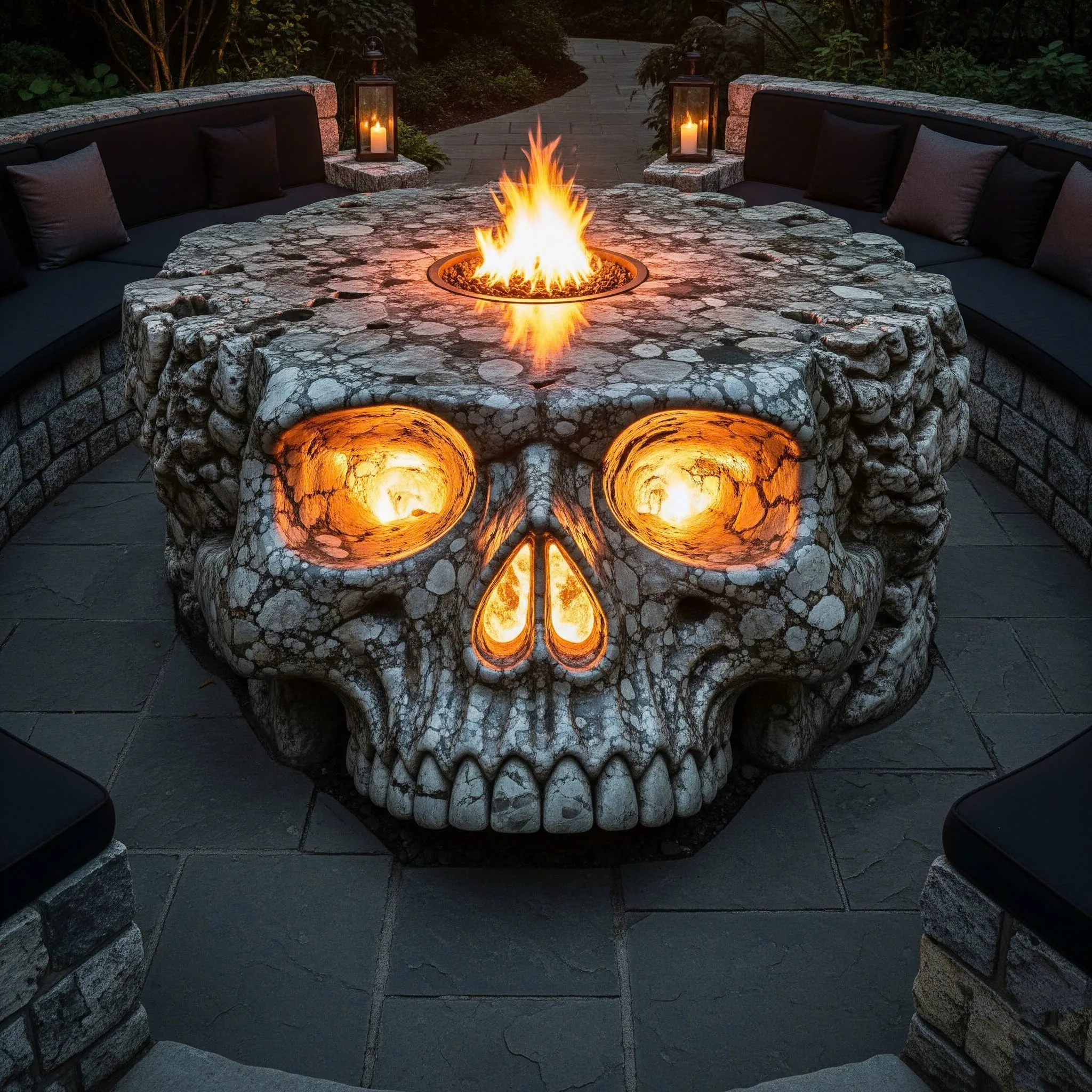
Fire, Stone, and the Face of Myth
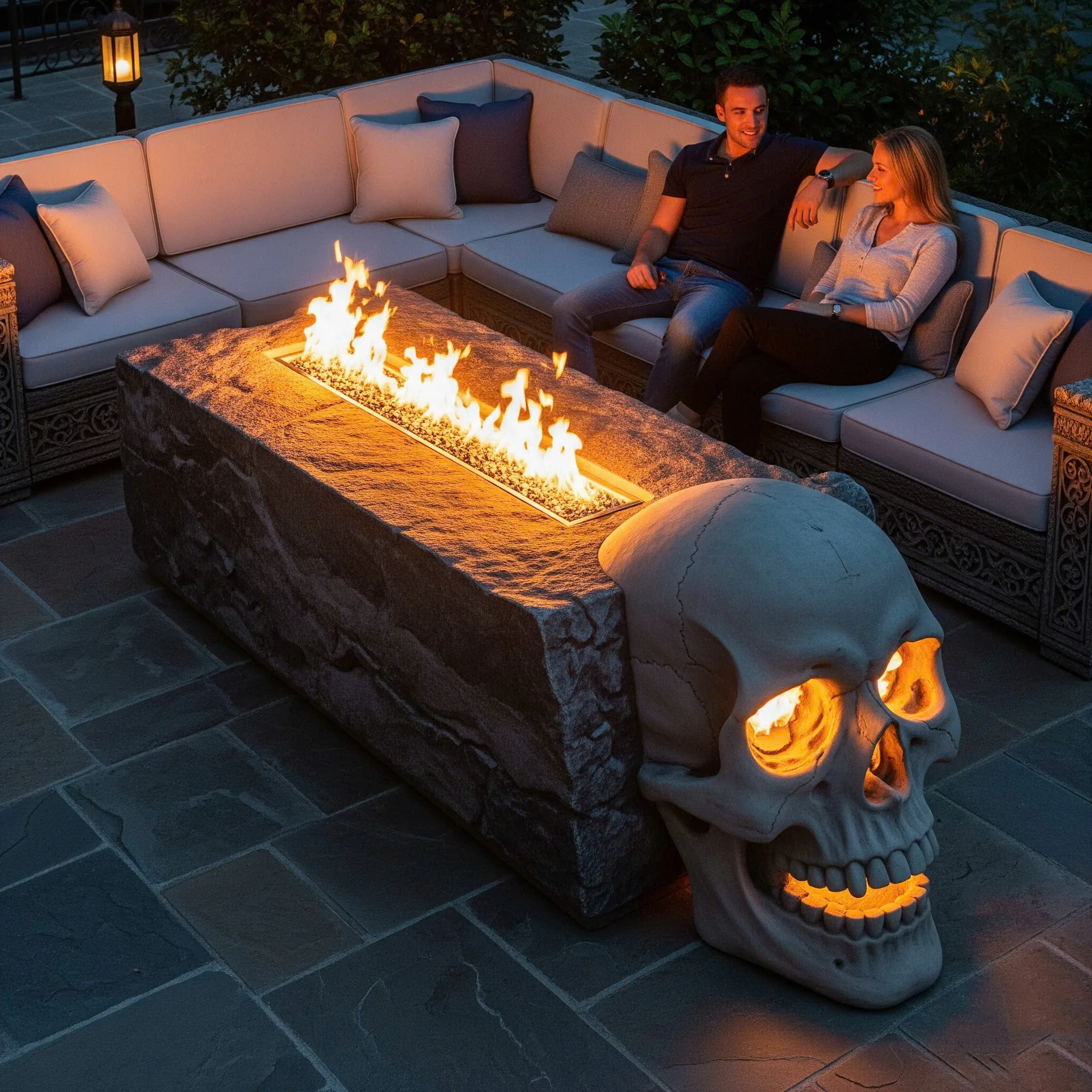
Humans have always gathered around fire to talk, dream, and make meaning. When that fire flickers inside a sculpted skull of stone—heavy, enduring, unmistakably iconic—something primal and modern collide. Stone Skull Shaped Fire Tables are not just heat sources or patio accents; they’re conversation pieces that thread together art, ritual, and hospitality. The skull, a universal emblem from rock music to ancient mythology, reframes the hearth as a sculpture—one that’s at once playful, gothic, celebratory, and strikingly contemporary. Stone grounds the design in longevity. Flame animates it.
This article explores Stone Skull Shaped Fire Tables from every angle: symbolism and style, materials and making, fuel types and safety, placement and performance, maintenance and sustainability, plus buying guidance, customization ideas, and hosting inspiration. By the end, you’ll know how to choose, place, and care for a skull-shaped fire table that feels like your home’s signature—where art meets flame and your nights meet a new kind of glow.
What Exactly Is a Stone Skull Shaped Fire Table?
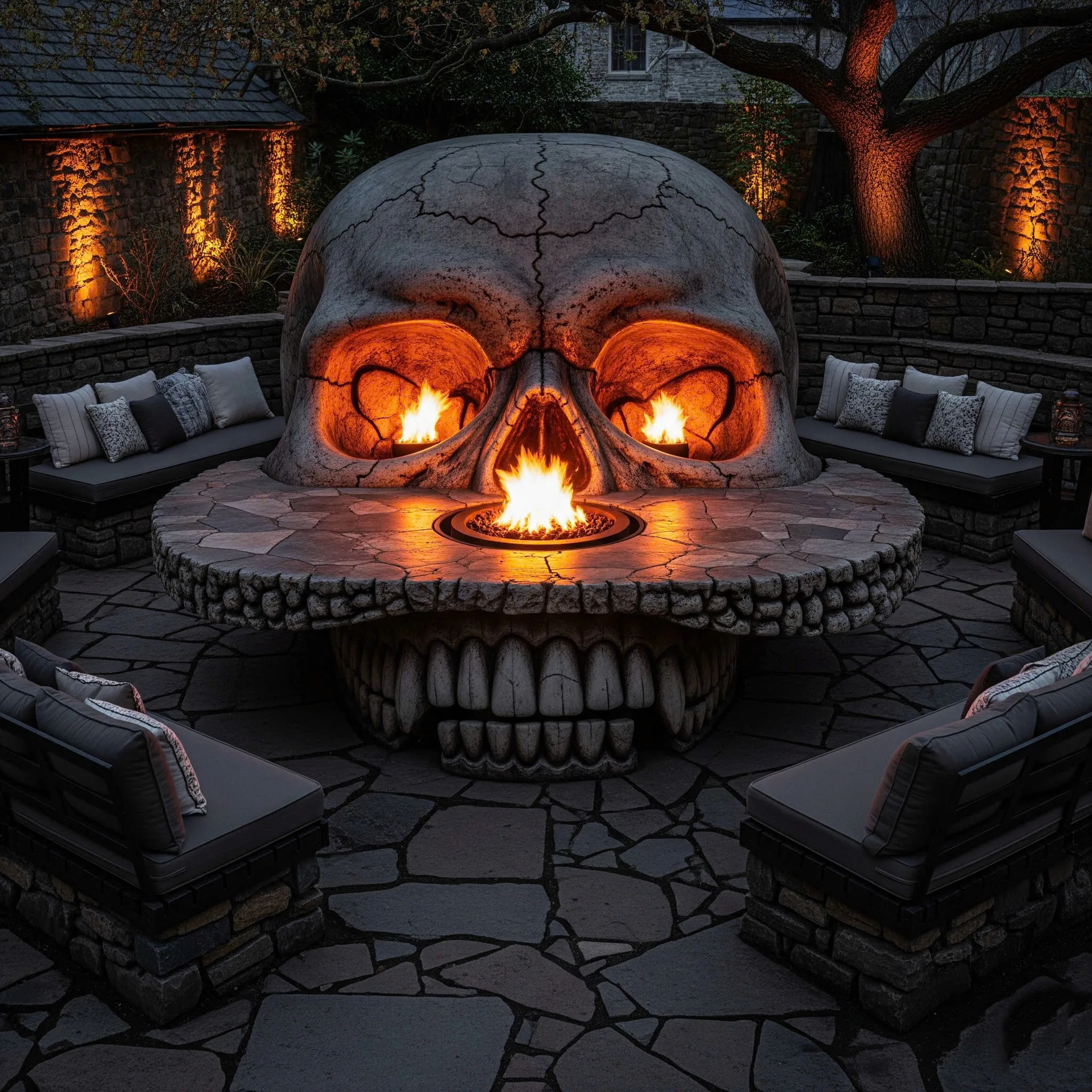
At its core, a stone skull shaped fire table is a functional outdoor fire feature whose primary mass is sculpted as a skull, typically with a flat or gently contoured tabletop surface integrated into the cranium or crown area. The “table” element supports drinks and small plates, while the skull form houses the fire chamber. Variants include:
- Open-Crown Bowl: A recessed fire bowl carved into the top of the skull.
- Eye-Socket Flames: Burners or flame ports that focus flame or glowing media in the orbits for dramatic effect.
- Jawline Hearth: A hinged or open mandible that reveals a small firebox or decorative ember bed.
- Full-Sculpt Table: A complete skull as base with a separate circular, square, or irregular stone or glass tabletop floating above on hidden supports.
Common components are:
- Sculpted stone body (carved natural stone or cast stone/concrete).
- Fire media (lava rock, fire glass, ceramic logs, or stones).
- Burner system (for propane or natural gas) or grate (for wood-burning models).
- Ignition hardware (match-lit, push-button/spark, or electronic).
- Tabletop (integral stone, tempered glass, or metal ring).
- Ventilation and drainage built into the sculpture.
This hybrid object works as furniture, sculpture, and appliance—equal parts focal point and functional hospitality piece.
Why Skulls? The Art and Meaning Behind the Motif
The skull motif is global, elastic, and layered:
- Memento mori & mindfulness: Historically, skulls remind us life is precious. In a home setting, they nudge reflection without gloom—especially when paired with warm, dancing firelight.
- Celebration of life: In many cultures, skull imagery symbolizes remembrance, joy, and continuity. When thoughtfully designed, Stone Skull Shaped Fire Tables can conjure a festive atmosphere rather than fear.
- Pop culture & subculture: From rock and metal to tattoo art and street fashion, skulls carry cool, rebellious energy.
- Timeless geometry: The skull’s curves and cavities are graphically compelling. Fire animates those hollow forms in dramatic, sculptural ways.
Used outdoors, the skull becomes less “macabre” and more mythic—a theatrical stage for flame that welcomes humor and awe.
Why Stone? The Materiality That Makes It Iconic
Stone is the perfect counterweight to fire:
- Durability: Basalt, granite, limestone, engineered cast stone, and high-performance concrete resist heat, weather, and time.
- Thermal behavior: Stone absorbs and radiates warmth, softening temperature swings and tempering heat around the seating perimeter.
- Texture & patina: Stone offers tactile richness—honed, bush-hammered, sandblasted, leathered, or chiseled. Over years, it ages beautifully.
- Mass & stability: Weight gives presence and anchors the table in wind or high-traffic spaces.
Material options at a glance:
- Granite: Hard, highly durable, low porosity. Excellent for tops; can be polished or leathered.
- Basalt: Dark, modern, sleek; often honed; good for dramatic contrast with flame.
- Limestone/Travertine: Softer, warmer tones; seal for stain resistance; great for Mediterranean aesthetics.
- Sandstone: Expressive grain and warmth; needs sealing.
- Cast stone / GFRC: Versatile forms and lighter weight than solid stone; can mimic textures; great for complex skull detailing.
- Hybrid stone-metal: Stone skull base with a steel or bronze top ring for refined contrast.
Anatomy of a Stone Skull: Design Considerations
Getting a skull right requires balancing realism, abstraction, and function:
- Proportions: Oversized skulls (700–900 mm wide) create generous tabletop surfaces and strong presence. Smaller versions (450–600 mm) work on apartment terraces.
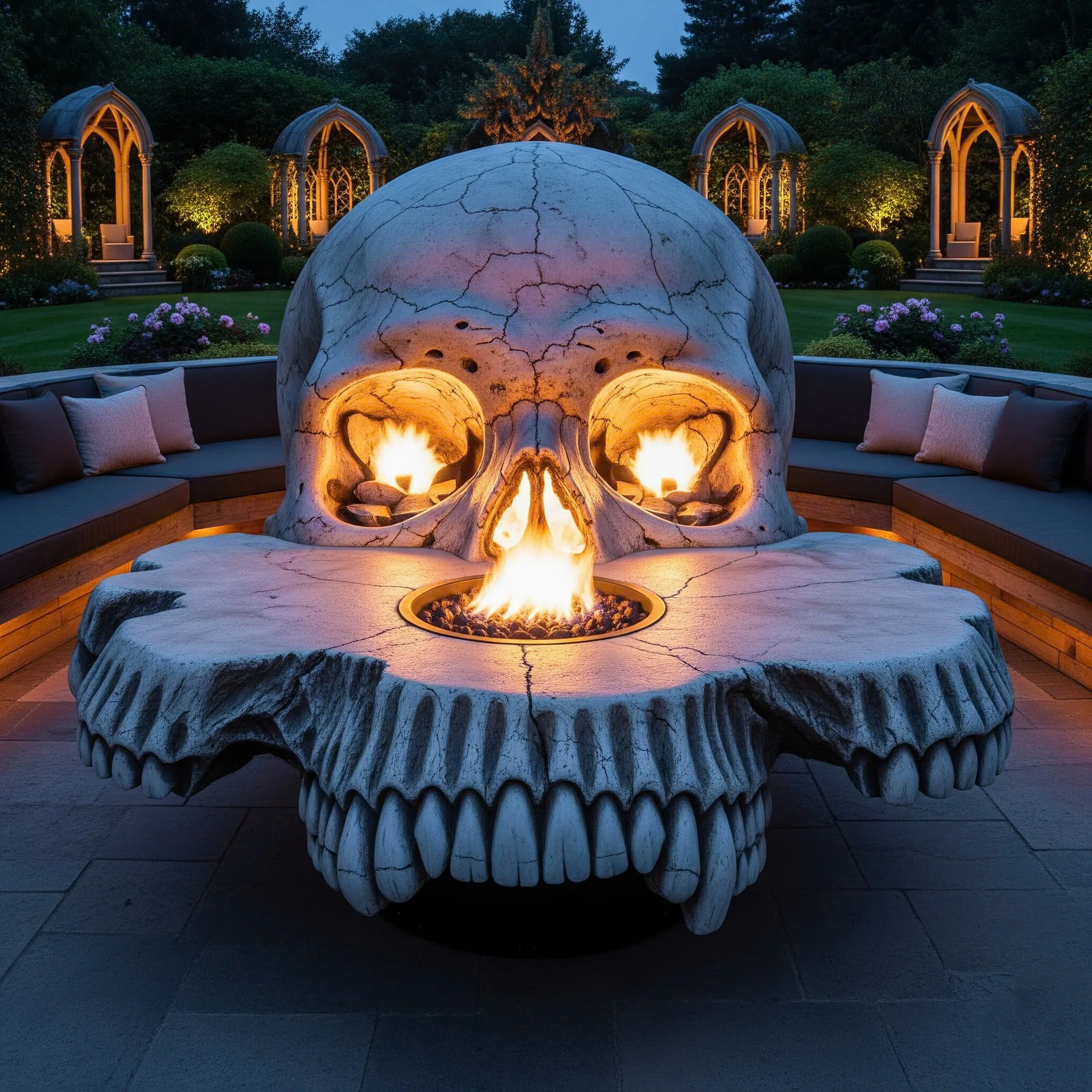
- Facial features: Deep-set eye sockets hold glowing glass/media; a slightly open jaw adds negative space and ventilation.
- Tabletop geometry: Circular or octagonal tops complement cranial curves; a ring top keeps the central flame visible while providing usable surface.
- Burner placement: Center-top bowls are most common; some designs split media into sockets for twin “orbital” glows.
- Drainage/venting: Channels prevent water pooling; vents balance combustion and reduce soot.
- Edges & ergonomics: Rounds and chamfers prevent snags; table height (about 420–520 mm) suits lounge seating.
- Weight distribution: Internal ribbing or thickened sections keep stress lines away from heat zones.
Making methods:
- Hand carving from stone blocks for unique, artisanal pieces.
- CNC milling for precise symmetry, then hand finishing.
- Casting with molds for repeatable designs and lighter shipping weights (especially GFRC).
- Hybrid builds combining sculpted stone shells with stainless burners and removable tops.
Fuel Choices: Wood, Gas, or Bioethanol?
Choosing the right fuel sets the tone for experience and maintenance.
Wood-Burning
- Pros: Crackle, aroma, ritual; high heat; classic campfire vibe.
- Cons: Smoke, ash, more cleanup; regional burn restrictions; sparks require screens; not ideal for close-in tabletops.
- Best for: Large, open patios or rural settings where wood fires are permitted, and where the skull’s mouth or crown can serve as a bonfire well with adequate spark protection.
Propane (LPG)
- Pros: Clean, convenient, instant on/off; high BTU; portable tank; consistent flame; low soot.
- Cons: Tank storage aesthetics; refilling logistics; ventilation needed.
- Best for: Most residential patios; hospitality when convenience matters; skull designs with integrated tank housing or remote tank concealment.
Natural Gas (NG)
- Pros: Continuous supply; lower fuel cost over time; no tanks.
- Cons: Requires gas line; installation by licensed pro; less portable.
- Best for: Permanent installations, high-use spaces, hotels, and restaurants.
Bioethanol
- Pros: Clean-burning liquid, simple install, minimal exhaust.
- Cons: Lower heat output; fuel cost; shorter burn times per refill.
- Best for: Decorative ambiance where heat is secondary and gas lines aren’t feasible.
Pro tip: If you want expressive flames licking out of eye sockets or crown vents, gas burners with shaped media (lava rock + fire glass) offer easy control and repeatable drama.
Heat, Flame Media, and Performance
Burner sizing (e.g., 40,000–90,000 BTU for residential gas units) affects flame height and spread. Skull forms can channel flame visually:
- Eye-socket emphasis: Position flame media to glow in sockets while keeping central flame in the crown bowl.
- Lava rock base with fire glass on top balances ember-like glow with sparkling highlights.
- Ceramic skull fragments (artful, fire-rated) inside the bowl echo the motif and intensify storytelling.
- Wind: Use wind guards (tempered glass) around the crown when needed; they preserve flame shape without hiding the sculpture.
Placement & Layout: Designing the Scene
A great Stone Skull Shaped Fire Table deserves a great stage.
- Clearances: Maintain manufacturer-recommended distances (often 1–2 m from combustibles laterally; always check your specific unit). Overhead clearance matters under pergolas.
- Seating geometry: Arrange lounge chairs 700–900 mm from table edge for knee comfort and heat enjoyment.
- Traffic flow: Provide at least 900 mm pathways around the seating cluster.
- Grounding & leveling: Ensure stable footing—stone pavers, concrete terraces, or gravel pads; correct for even burn and safety.
- View lines: Aim the skull’s “face” toward main approach or conversation zone. If sockets glow, make them visible from the entry path.
- Lighting: Underlighting the pedestal or uplighting the skull from the sides creates theatrical depth even when the fire is off.
Styling & Decor Pairings
Modern Minimal: Basalt skull + matte black aluminum chairs + gray cushions + simple succulents in concrete planters.
Gothic Garden: Limestone skull + wrought iron seating + dark florals + antique lanterns.
Desert Bohemian: Sandstone skull + teak loungers + woven rugs + cacti + lantern strings.
Coastal Rock: Granite skull + bleached teak + driftwood accents + marine rope details.
Tropical Tiki Remix: Cast-stone skull with subtle motifs + bamboo seating + banana leaves + rum-toned palette (keep it respectful and tasteful).
Anchor the palette with the stone’s natural color; layer textiles for comfort; add side tables for function.
Use Cases: From Patios to Hospitality
- Residential patios & rooftops: Signature statement for entertaining; pairs with outdoor kitchens and plunge pools.
- Boutique hotels & bars: A brand-defining focal object—great for social media and nighttime ambiance.
- Event rentals: Unforgettable centerpieces for Halloween, Day of the Dead–inspired (respectful) events, concerts, and product launches.
- Art gardens & galleries: Fire as performative sculpture; skull as archetype to draw crowds.
Safety & Compliance (Read Before You Light)
- Codes & certifications: Choose burners and assemblies rated/listed for outdoor use; follow local codes.
- Surface & stability: Place on noncombustible, level surfaces; consider anchoring heavy tops.
- Clearances & wind: Respect lateral and overhead clearances; use wind guards if needed.
- Ventilation: Never use gas or bioethanol skull tables indoors; ensure open-air placement.
- Children & pets: Eye sockets and jawlines entice curiosity—establish a “no-touch” zone and consider screens.
- Fuel handling: Store propane safely; never refill near open flame; for wood, use a spark screen and dry hardwoods.
- Shutoff: Gas models should have accessible shutoff valves; consider timer or electronic safety features in hospitality spaces.
- Seasonal checks: Inspect hoses, fittings, and seals; re-seal stone surfaces as recommended.
Maintenance & Care
Stone care:
- Sealing: Apply breathable sealers suitable for your stone (annually or per manufacturer guidance) to resist stains/soot.
- Cleaning: Soft brush and pH-neutral stone cleaner; avoid acids on calcitic stones (limestone, travertine).
- Soot management: For occasional soot on stone, use specialty stone-safe degreasers and soft pads; test first.
Fire system care:
- Media: Rinse fire glass occasionally to remove dust; check lava rock for cracking; replace if needed.
- Burner: Inspect ports for debris; ensure even flame distribution; protect with a cover when not in use.
- Covers: Use well-fitted covers that allow ventilation and prevent water pooling; remove after rain to dry surfaces.
Freeze–thaw:
- Elevate slightly for drainage; never allow water to sit in bowls over winter; use covers and consider temporary media removal in harsh climates.
Sustainability Considerations
- Stone sourcing: Look for responsibly quarried stone or recycled stone offcuts.
- Concrete mixes: If cast stone, ask about supplementary cementitious materials (SCMs) and low-CO₂ cements.
- Fuel choices: Natural gas tends to be more efficient than propane; bioethanol has cleaner combustion but lower heat output; wood should be seasoned and sourced responsibly.
- Longevity by design: The most sustainable product is the one that lasts; stone’s durability reduces replacement cycles.
Buying Guide: Choosing the Right Stone Skull Shaped Fire Table
- Purpose & vibe: Is it theatrical centerpiece, intimate lounge fire, or branding icon?
- Size & scale:
- Small patios: 450–600 mm skull width; 400–450 mm table height.
- Large terraces: 700–900+ mm width; 450–520 mm height; generous top ring.
- Material:
- Natural stone for authenticity and patina.
- GFRC/cast stone for weight savings and complex forms.
- Fuel & BTU: Pick gas type based on infrastructure; size BTU to climate and seating distance.
- Ignition:
- Match-lit: Simple, durable, budget-friendly.
- Spark/Push-button: Convenience without power.
- Electronic: Remote control, safety sensors (great for hospitality).
- Tabletop: Tempered glass for lightness; stone for cohesion; metal rings for durability and a slim edge.
- Media: Lava rock (natural look), fire glass (jewel-like sparkle), ceramic logs/bones (thematic).
- Weight & mobility: Verify floor load limits on decks/rooftops; consider casters on concealed plinths for repositioning.
- Weather strategy: Built-in drainage, fitted cover, and finish suitable for your climate.
- Budget: Expect wide ranges—from artisanal cast pieces to monumental hand-carved sculptures. Factor installation, gas lines, covers, and seating into total cost.
- Warranty & support: Favor brands or makers with accessible parts, burner warranties, and service networks.
- Compliance: Ensure local install meets code; retain documentation.
Customization: Make the Skull Uniquely Yours
- Facial style: Anatomical accuracy, stylized minimalism, geometric low-poly, or folklore-inspired forms.
- Inlays: Bronze teeth, gemstone eyes (protected, non-flammable), or mosaic accents around the crown bowl.
- Light effects: Low-voltage LEDs within or under the sockets (not in the flame path) for a glow even when off.
- Engraving: Family crests, dates, or quotes along the jawline or table rim.
- Finish: Honed minimalist, hand-chiseled rustic, or patinated/stained cast stone.
- Color media: Smoke-gray glass for a moody tone; amber glass for warmth; mixed sizes for texture.
- Multi-skull arrays: For large spaces, cluster two or three smaller skulls around a central lounge.
Commissioning an artisan? Provide sketches, reference images, desired dimensions, fuel choice, and a mood board. Approve a maquette or 3D rendering before fabrication.
Installation Basics (Read as Orientation, Not a DIY Manual)
- Site prep: Level, noncombustible surface; confirm drainage slope (1–2%).
- Gas models:
- Hire a licensed professional to run and connect gas lines, pressure test, and certify.
- Include accessible shutoff and consider a quick-disconnect for service.
- Verify orifice sizing for altitude if you’re in a high-elevation region.
- Wood models:
- Use spark screens; position away from overhangs; keep an extinguisher nearby.
- Ash removal plan—noncombustible container and regular cleaning.
- Final checks: Confirm clearances, secure table stability, add wind guard if necessary, and place furniture at safe distances.
Hosting & Rituals: Bringing the Experience to Life
Story Hour: The skull form invites myth. Host a storytelling night—folklore, ghost stories, or family histories—lit by the crown’s golden glow.
Seasonal Ceremonies:
- Autumn/Halloween: Swap in amber fire glass; arrange gourds and dried grasses (safely away from flame).
- Winter Solstice: Use lanterns, evergreen boughs (non-flammable distance), and warm blankets.
- Spring Gatherings: Pair with flowering pots, light soundscapes, herbal spritzers.
Tasting & Toasting: Marshmallows are fine over gas at safe distance using long skewers; avoid greasy foods over burners to keep media clean. Set coasters and small trays on the table ring to protect surfaces.
Music & Light: Low-volume playlists and gentle perimeter lighting let the flame be the star. Use uplights to sculpt the skull when extinguished.
Common Mistakes to Avoid
- Undersizing the burner: Leads to disappointing flame and insufficient warmth.
- Ignoring wind: Place wind guards or adjust layout; wind can push flames into tabletops.
- Skipping sealing: Unsealed stone stains and weathers quickly.
- Overcrowding seating: Keep comfortable reach and heat distances.
- Indoor use of gas/bioethanol skull tables: Always outdoors unless explicitly certified for indoor use (rare).
- No cover: Exposure shortens lifespan; covers are inexpensive protection.
- Poor drainage: Standing water in bowls leads to staining and freeze damage.
- Tank aesthetics: For propane, plan concealment or remote placement from the start.
Quick FAQs
Q1: Are Stone Skull Shaped Fire Tables safe for families?
Yes—when installed correctly, used outdoors, and supervised. Add clear rules for children and pets, maintain recommended clearances, and consider wind guards.
Q2: Can I use one on a rooftop?
Often yes, provided structure can handle the load, local codes allow it, and wind is addressed. Gas lines must be professionally installed.
Q3: Do they actually heat well, or are they mostly decorative?
With appropriately sized burners (e.g., 60,000–90,000 BTU for larger tables), they provide substantial warmth within typical lounge distances.
Q4: Will the skull look creepy?
Design language matters. Minimal, stylized skulls feel modern and chic; anatomical versions feel bolder. Finishes and lighting further shape the mood.
Q5: Wood or gas—what’s better?
For convenience and clean operation, gas wins. For ritual and aroma, wood is unmatched (where permitted).
Q6: How heavy are they?
From 45–90 kg for cast-stone small models to 180+ kg for large natural-stone pieces. Always check floor load capacity.
Q7: Can I cook over them?
They’re not grills. Light toasting at the periphery is fine; avoid grease and dripping foods on burners/media.
Q8: How do I keep the stone clean?
Seal, cover, and spot-clean with pH-neutral stone cleaners. Avoid acidic products on calcitic stones.
Q9: Can the eyes glow without open flame?
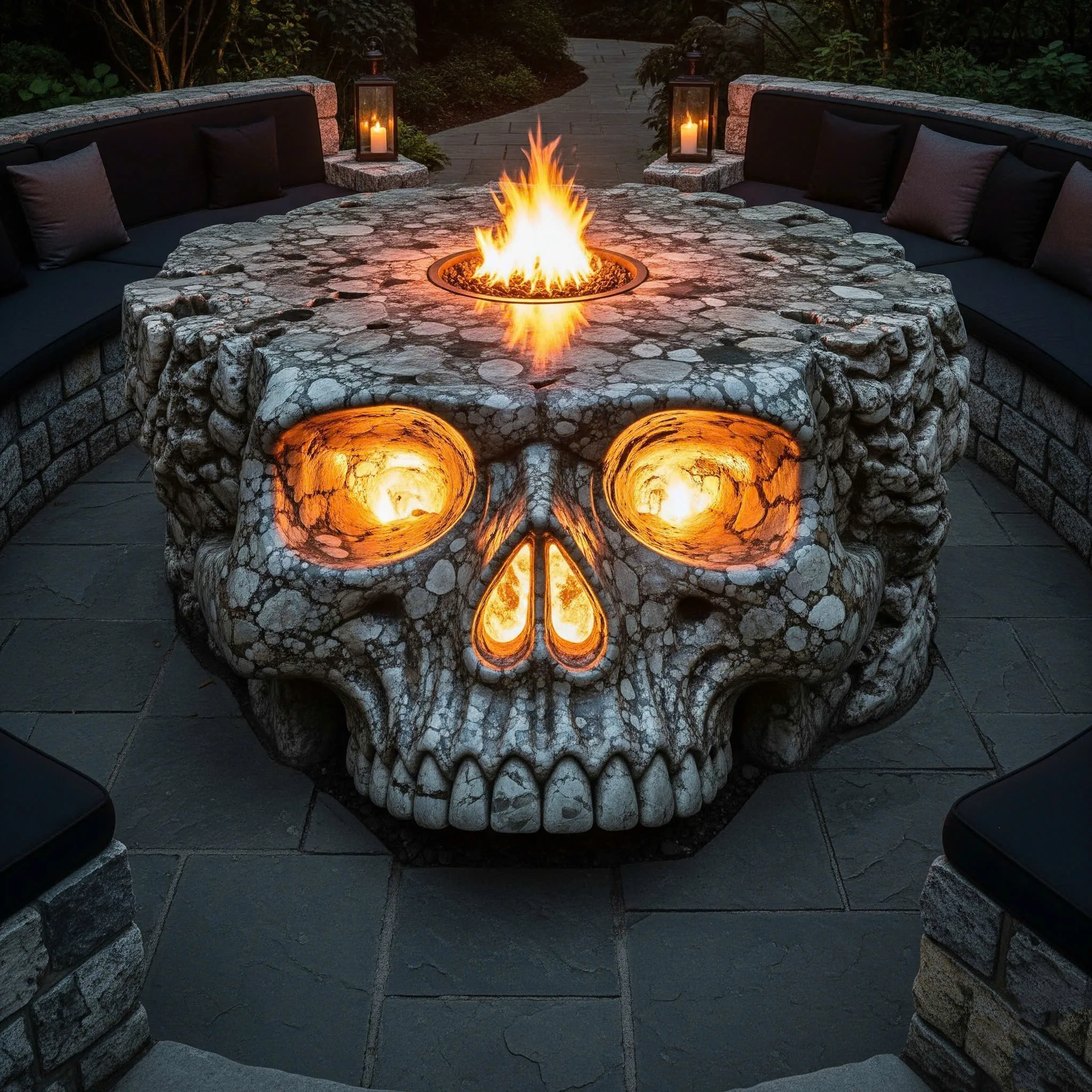
Yes—integrate low-voltage LEDs behind diffusers in the sockets for off-hour ambiance (separate from the burner zone).
Q10: What’s the best media?
Lava rock for natural texture; fire glass for sparkle; a blend for depth. Choose darker media for dramatic contrast with pale stone, lighter media for luminous basalt.
Conclusion: The Moment Flame Finds a Face
In a world of interchangeable patio furniture, Stone Skull Shaped Fire Tables dare to be unforgettable. They transform warmth into spectacle, hospitality into storytelling, and outdoor space into a stage where art meets flame. Stone gives the sculpture weight, texture, and time-earned character. Fire gives it breath. Whether you prefer a minimalist basalt visage with a quiet crown of flame or a grand limestone cranium whose sockets glow like coals at dusk, the effect is the same: people lean in, conversations deepen, nights stretch longer.
Choose materials that will age gracefully. Size the burner to your climate and seating. Place the skull with intention—facing your approach, framed by light, grounded by texture. Care for the stone and protect it from the elements. And then, invite friends, pour something warm, and let the skull’s steady gaze and the fire’s living light do what they’ve always done: turn an ordinary evening into a shared memory.
In that meeting of elements—stone and fire, sculpture and function—you’ll find the true promise of Stone Skull Shaped Fire Tables: a home that not only looks remarkable, but feels alive.