Introduction
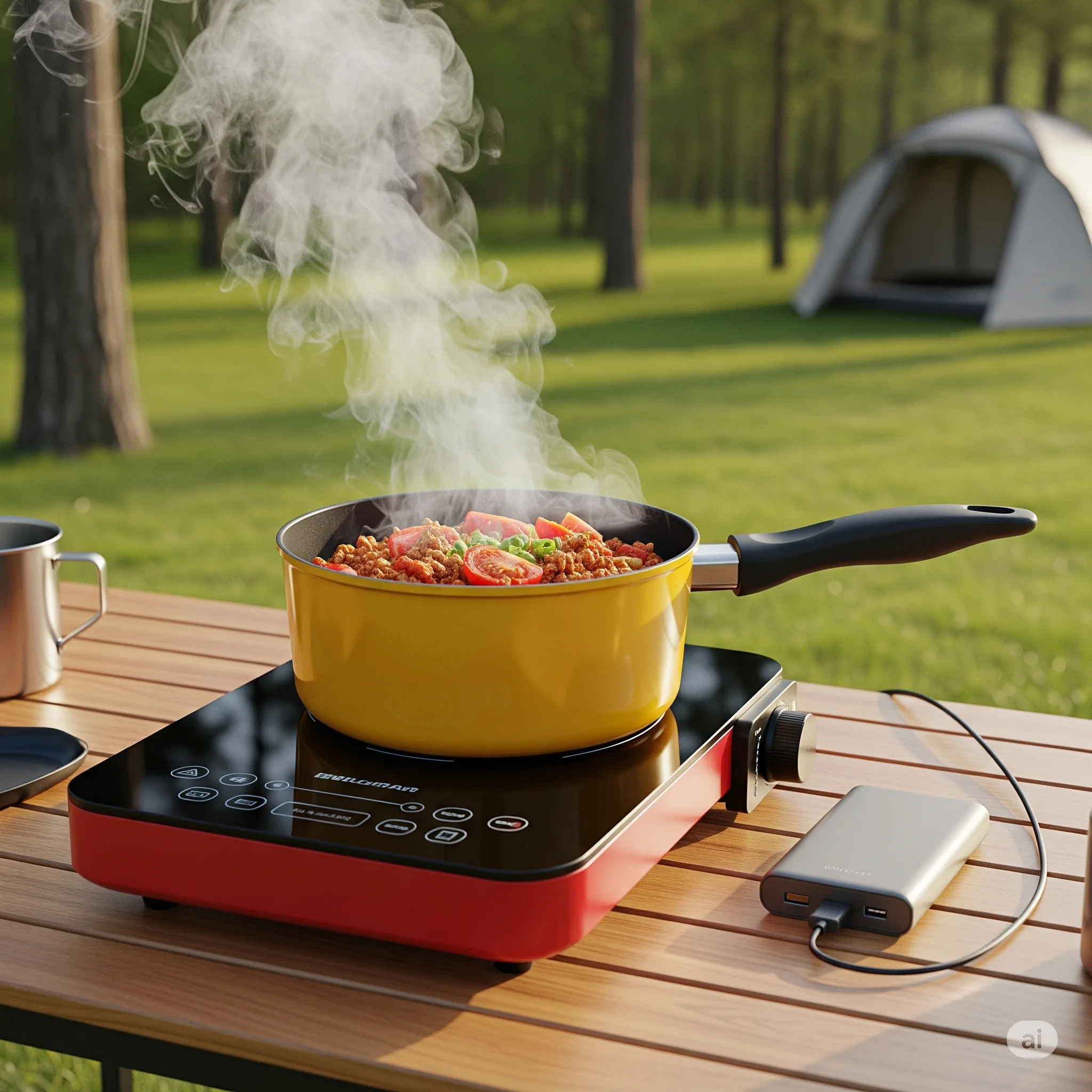
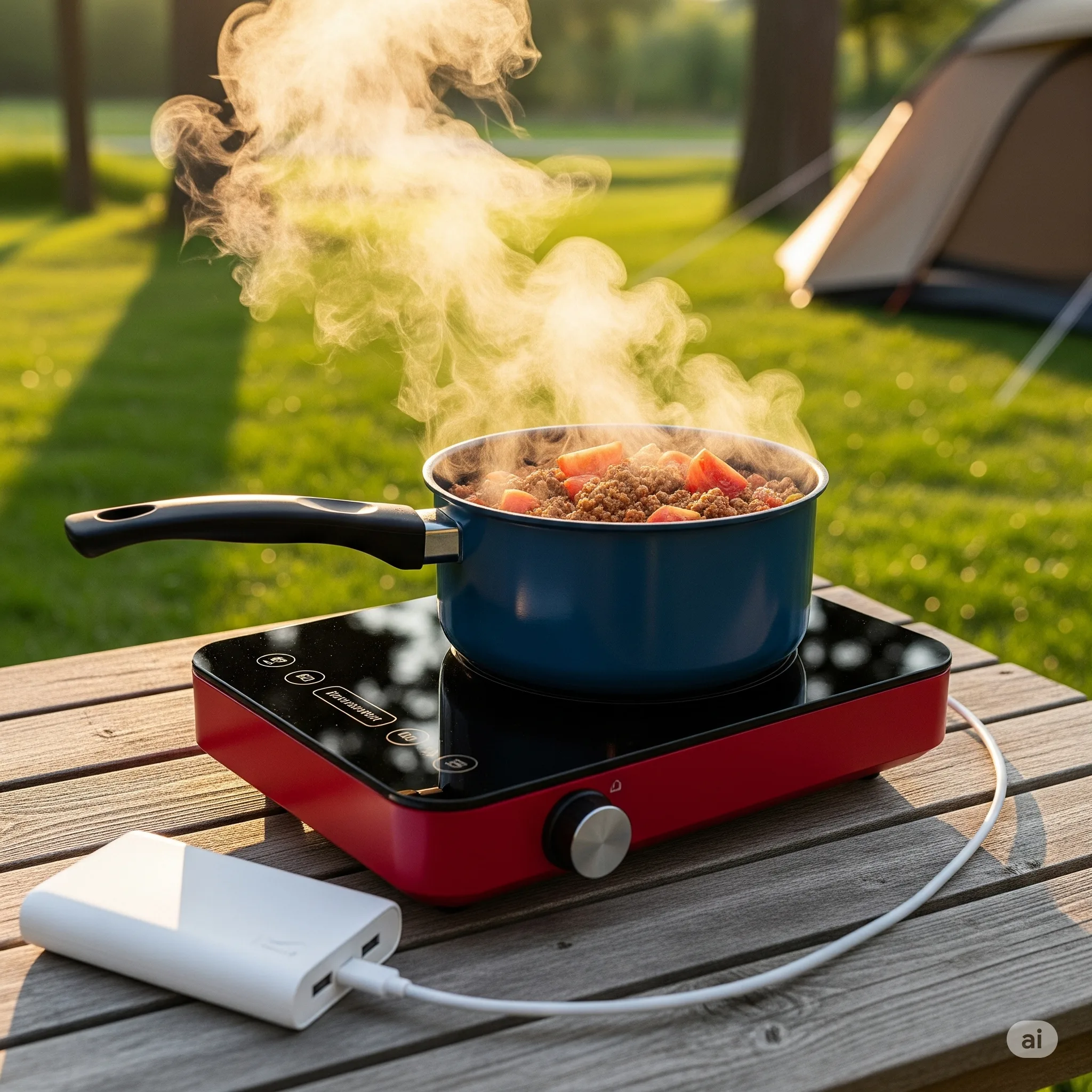
For decades, most campers have relied on propane canisters, liquid fuel bottles, alcohol burners, or wood to make coffee, boil water, and cook meals outdoors. That gear works—but it also comes with noise, fumes, soot, waste canisters, and the constant mental math of “Do we have enough fuel left?” In the last few years a different option has quietly matured: battery powered camping stoves. These compact systems—either stand-alone electric stoves with built-in batteries or hotplates/induction burners paired with portable power stations—deliver clean, precise heat anywhere you can carry a charged battery.
This article makes the case that battery powered camping stoves are not just another niche gadget; they are the perfect and unique choice for many modern outdoor scenarios. We’ll explain how they work, what makes them different, how to size a system properly, where they shine (and their limits), how to cook well with them, and how to choose one that fits your trips. If you’ve ever wished your camp kitchen felt more like your kitchen at home—without the smoke, hiss, or waste—read on.
How battery powered camping stoves work
The core idea
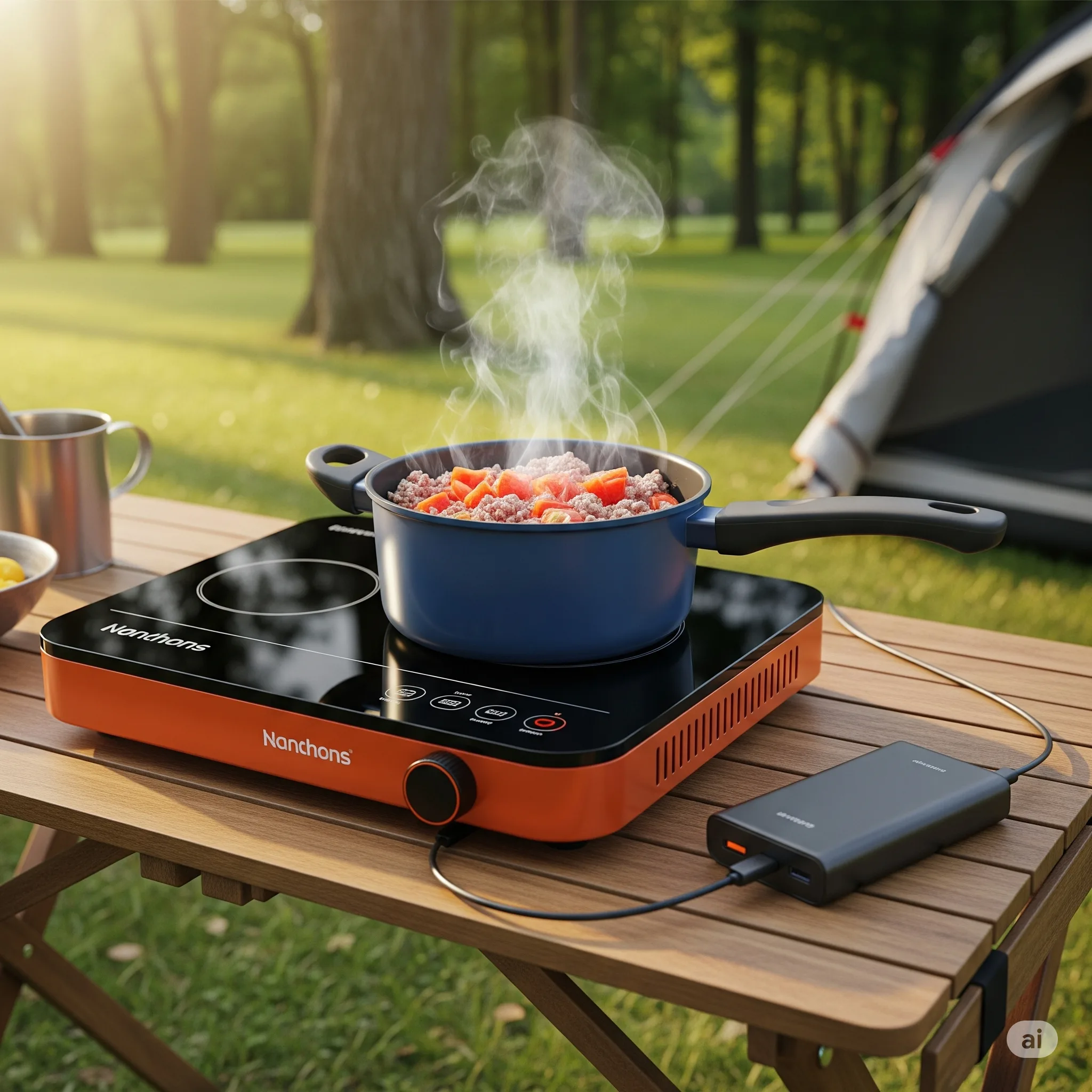
At heart, a battery powered camping stove converts stored electrical energy into heat at the pot. There are two common designs:
- Resistive hotplates: A metal element gets hot as electricity passes through it. These stoves are simple, compatible with any flat-bottom pot, and often draw 100–700 watts depending on size. They’re like compact versions of a home hotplate.
- Induction burners: A coil generates a magnetic field that heats the pot directly—no red-hot element—so energy goes into the cookware itself. Induction is typically more efficient and more responsive, but requires ferromagnetic cookware (e.g., most stainless steel and cast iron, not plain aluminum unless it has a magnetic base). Induction burners usually draw 600–1,500+ watts at full power (camp-oriented models tend to cap lower).
Both designs can be built into self-contained stoves with an internal battery, or powered by a portable power station (a rechargeable battery with AC/DC outputs). Functionally they’re similar; the difference is whether the battery is removable and how much capacity/power you can bring.
Power, energy, and what they mean for cooking
To size and understand battery powered camping stoves, keep two numbers in mind:
- Power (W) is how fast a stove can deliver heat. Higher watts = faster boils and better searing, up to the limits of your cookware and battery.
- Energy (Wh) is your “fuel tank.” More watt-hours = more meals before you need to recharge.
A quick, practical energy check for boiling water: heating 1 liter of water from 20 °C to 100 °C requires roughly 93 Wh in a perfect world. Real stoves lose heat to the air and pot, so assume 60–80% efficiency. At 70% efficiency, plan on about 133 Wh per liter of water boiled.
That means:
- A 300 Wh battery could reasonably boil ~2 liters of water (plus a bit extra for simmering or pan cooking).
- A 500 Wh battery might cover ~3–4 liters across a trip.
- A power-efficient induction setup, tight lid, wind-resistant area, and insulated pot cozy can reduce losses and stretch capacity.
For pan tasks (sautéing, pancakes, eggs), energy use depends on temperature and time. A light breakfast (two eggs and coffee for one) might consume 30–60 Wh with a resistive plate and good technique; a high-heat sear will use more.
Why power matters as much as capacity
If your burner tops out at 300–500 W, it can still cook—but boil times lengthen. A liter of water at 500 W, ignoring losses, takes at least ~11 minutes (93 Wh ÷ 500 W ≈ 0.186 hours ≈ 11 minutes); with real-world losses, think 12–20 minutes. Bump to 1,000 W, and you roughly halve the wait. For groups, higher power keeps meals moving and improves pan performance (browning, stir-fries, rapid reboils).

Why battery powered camping stoves are a perfect and unique choice
Clean, quiet, and calm
There’s no pressurized fuel canister hissing, no soot on pots, and no fumes from combustion. You can actually chat while water heats. The cooking experience feels stress-free and home-like, especially at sunrise or in crowded camps where noise and smell travel. The unique benefit is that the “soundscape” of camp stays peaceful. For photographers, anglers, and parents with sleeping kids, that’s priceless.
Precision control and repeatability
Induction and quality resistive plates respond instantly to dial changes. Simmer really means simmer; rolling boil stays rolling; chocolate can be tempered with finesse. If cooking well is part of why you camp, the culinary ceiling is higher with electricity than with tiny canister burners.
Safer by design (with essential caveats)
No open flame eliminates flame-contact risks and reduces wildfire potential in many situations. There’s also no carbon monoxide from fuel burning at the stove itself. That said, heat is still heat: never cook in enclosed spaces or tents, keep stoves stable and away from flammables, and follow your stove’s safety guidance. Battery packs include protections (short-circuit, over-temp, over-current), adding another layer of safety. Always check local regulations: some fire restrictions allow electric cooking devices while banning open flames, but rules vary by location and conditions.
Less waste, easier logistics
No empty canisters to pack out, no half-used bottles to sort before each trip, no guessing at fuel levels. You see your battery percentage and plan accordingly. Over time, not buying disposable fuel can reduce both cost and waste.
Power multipurpose flexibility
Your “fuel” is electricity you can also use for headlamps, cameras, phones, GPS units, lanterns, heated blankets, and CPAP machines. A portable power station becomes a trip hub, and the stove is just one excellent appliance attached to it. Add a solar panel and you can keep the whole camp running on sunlight.
Works where flames can’t
Some venues (certain trailheads, picnic shelters, boats, rental cabins) restrict flames but permit battery powered camping stoves. They’re also handy in storm shelters or under a porch during rain (still outdoors, stable, and ventilated). That opens cooking options that a flame stove can’t legally or safely match.
Types of battery powered camping stoves
Stand-alone battery stoves
These integrate a battery pack and heating element into a single unit. They’re simple: charge at home, cook in the field, recharge later. Pros include compactness and minimal cabling; cons include fixed capacity and usually lower peak power. Best for: day trips, minimalist overnights, car picnics, emergency kits.
Power-station + burner setups
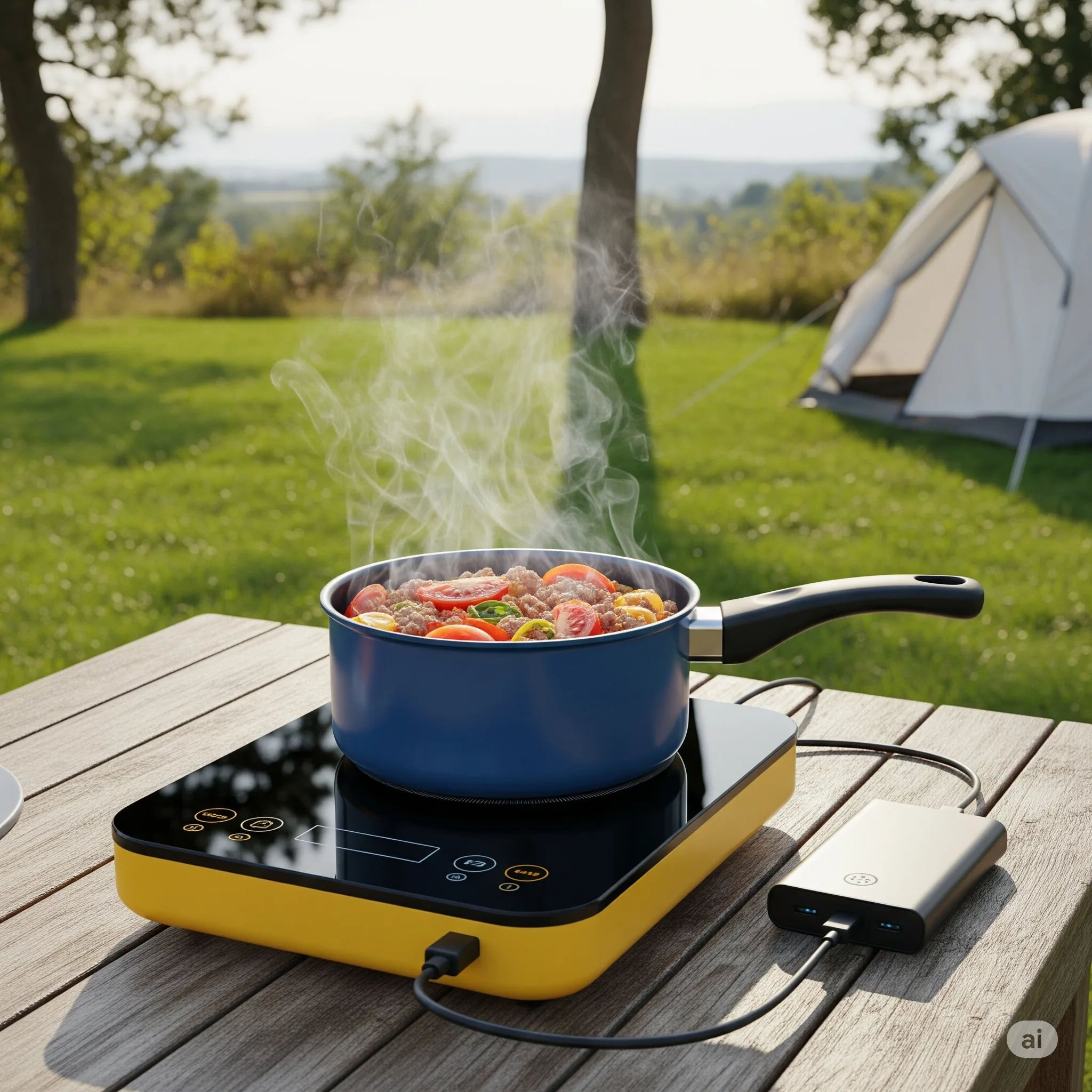
Here, a portable power station (lithium battery with AC/DC ports) drives a compact induction or resistive burner. You choose the burner and battery size independently. Pros: huge flexibility, better peak power, and swappable batteries. Cons: more pieces and (often) higher total weight. Best for: car camping, basecamps, vanlife, group trips, or any scenario where you’ll also power lights, fridges, or devices.
Low-draw vs. high-draw models
- Low-draw (100–500 W): slower boils; great for simple meals, solo travelers, and tight energy budgets.
- Mid-draw (600–900 W): noticeable speed boost; viable for couples and small groups.
- High-draw (1,000–1,500 W): kitchen-like performance; ideal for groups, real pan searing, and multi-course meals—paired with an appropriately sized power station.
Choosing the right battery powered camping stove
Step 1: Match stove power to your cooking style
Ask: What do you actually cook? If you mostly boil water for coffee, tea, or dehydrated meals, a 300–600 W solution works. For simple one-pan meals like eggs, quesadillas, or stir-fries, 600–1,000 W is more suitable. For group cooking, searing, and pasta water for 4+, choose 1,000–1,500 W.
Step 2: Estimate daily energy (Wh) honestly
Rough planning numbers (per person, per day): Coffee/tea (2 mugs): 40–120 Wh. Oatmeal or dehydrated dinner: 60–140 Wh. Eggs + toast or pancakes: 50–150 Wh. Searing protein or stir-fry: 120–250 Wh. Add 20–30% for inefficiencies and weather. For two people doing breakfast and dinner with hot drinks, plan ~300–600 Wh/day. For a family of four cooking real meals, ~700–1,200 Wh/day is realistic.
Step 3: Consider battery chemistry and weight
- NMC/NCA lithium-ion: high energy density (lighter per Wh) but fewer cycle lives.
- LiFePO₄ (LFP): heavier for the same Wh but longer cycle life and better thermal stability.
Step 4: Pot and pan compatibility
Induction requires a magnetic base. Test cookware with a magnet. Cast iron and most stainless steel work, many ultralight aluminum pots do not. Resistive hotplates work with anything flat.
Step 5: Weather and season
Cold reduces battery output. Store batteries insulated, keep them off icy ground, and add 15–25% capacity margin in winter.
Step 6: Safety and ruggedness
Look for stable bases, tip-over protection, splash resistance, short cables, and over-temp protection.
Charging strategies in the field
The simplest method is charging at home before the trip. Vehicle charging works via 12 V DC but is slower. Solar charging with a 100–200 W panel can sustain cooking indefinitely in good conditions. Swappable batteries allow seamless cooking while one charges.
Real-world scenarios: dialing the setup
- Solo overnight: 300–500 W stove, 200–300 Wh battery, boil-only meals.
- Weekend for two: 600–1,000 W induction, 500–800 Wh battery, coffee, pasta, and sautéed veggies.
- Family basecamp: 1,200–1,500 W stove, 1,000–2,000 Wh battery, large meals.
- Vanlife: 1,000–1,500 W stove, 2,000+ Wh battery with solar, daily cooking.
- Emergency prep: Induction burner, 1,000–2,000 Wh battery, simple meals during outages.
Cooking technique: getting the most from your watts
Always use lids, pre-heat smartly, match pots to burner size, shield from wind, choose efficient cookware, and batch cooking tasks to save energy.
Safety essentials
Cook on stable surfaces, keep electronics dry, ventilate cooking areas, care for batteries, and store properly.
Environmental and experiential advantages
No single-use canisters, cleaner pots and air, and the ability to run on renewable solar energy.
Cost of ownership
Upfront cost is higher than gas stoves, but fuel is nearly free thereafter. Frequent campers may break even after a few seasons.
Common myths
Cold does not make batteries useless if insulated. Induction can sear steaks if properly powered. Lightweight pots can still be used if magnetic. Electric stoves can be safe if handled correctly. Fire ban rules vary—always check.
Care and longevity
Keep clean, inspect cables, update firmware if available, store batteries correctly, and cycle them regularly.
Buyer’s checklist
Check stove type, peak power, battery capacity, total weight, cookware compatibility, charging options, safety features, field usability, durability, and multipurpose potential.
Conclusion
Battery powered camping stoves transform the outdoor kitchen into a quiet, precise, and clean cooking environment. They reduce waste, work where flames cannot, and provide real cooking control. While not ideal for ultralight backpacking, they are unbeatable for car camping, basecamps, vanlife, and family trips. That’s why they are the perfect and unique choice: bringing comfort, safety, and sustainability to outdoor cooking.