
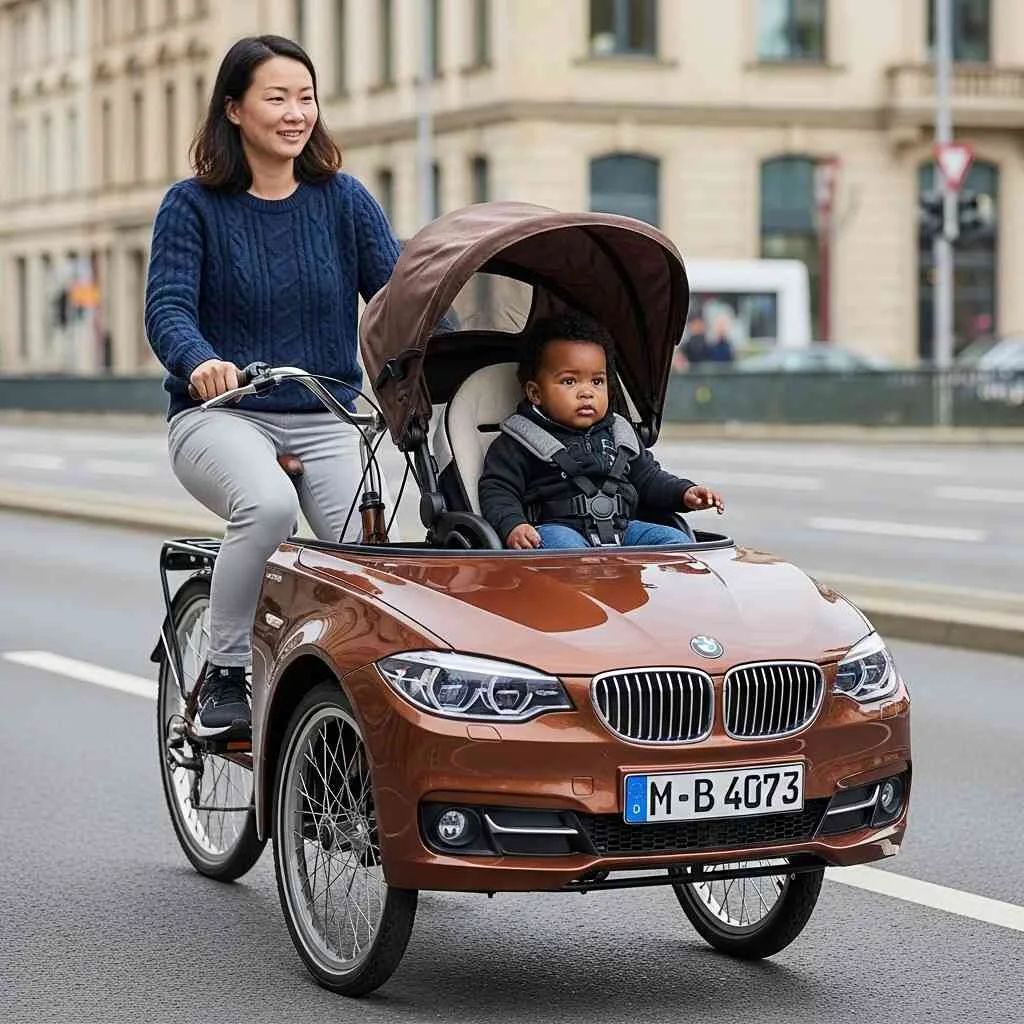
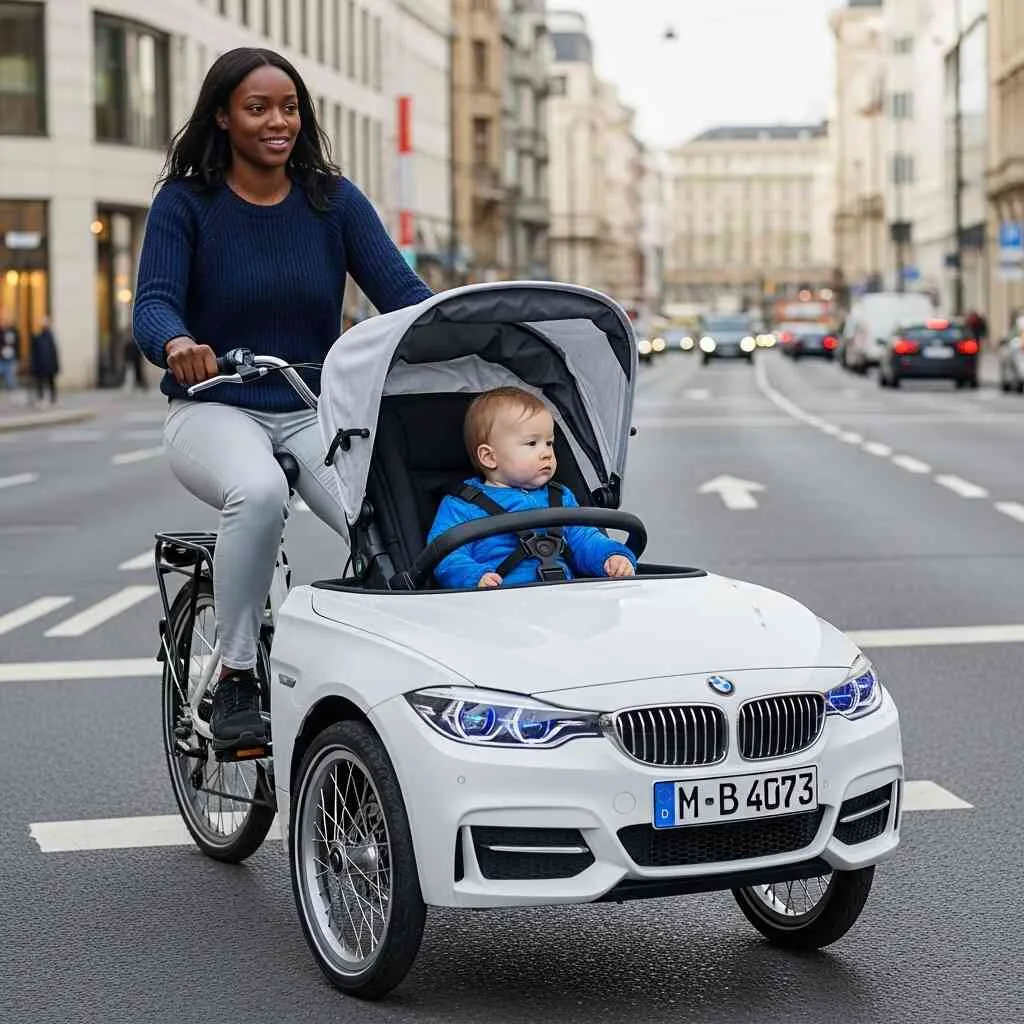
Urban parents today face a practical contradiction: they want mobility that’s easy, sustainable, and safe — but they also want style, comfort, and efficiency. Enter the BMW Cargo Bike Stroller: a concept (and, increasingly, a real-world solution in premium mobility circles) that blends the iconic language of automotive luxury with the down-to-earth practicality of cargo cycling. This hybrid — equal parts stroller, cargo bike, and family vehicle — reframes what it means to travel with children and goods in a city built for pedestrians, scooters, and bikes.
At first glance, a cargo bike that doubles as a stroller may seem like a novelty. Look closer and you’ll see a powerful idea: transportation tailored to family life, not just traffic. The BMW Cargo Bike Stroller is designed to carry children safely, to transport groceries and school bags, and to do so in comfort and style. It isn’t merely a tool for shifting weight from A to B; it’s a mobility philosophy that prioritizes human-scale interaction, active living, and intelligent design.
In this article we’ll delve deep into what the BMW Cargo Bike Stroller represents — its design DNA, engineering choices, family-first features, safety systems, and how it situates itself among modern transportation options. Whether you’re a parent curious about a car-free lifestyle, a design lover fascinated by how luxury brands reinterpret everyday objects, or a city planner thinking about sustainable alternatives, this piece explores how a high-end cargo-bike-stroller can reshape the rhythm of family life.
The Design Philosophy: Luxury Meets Practicality
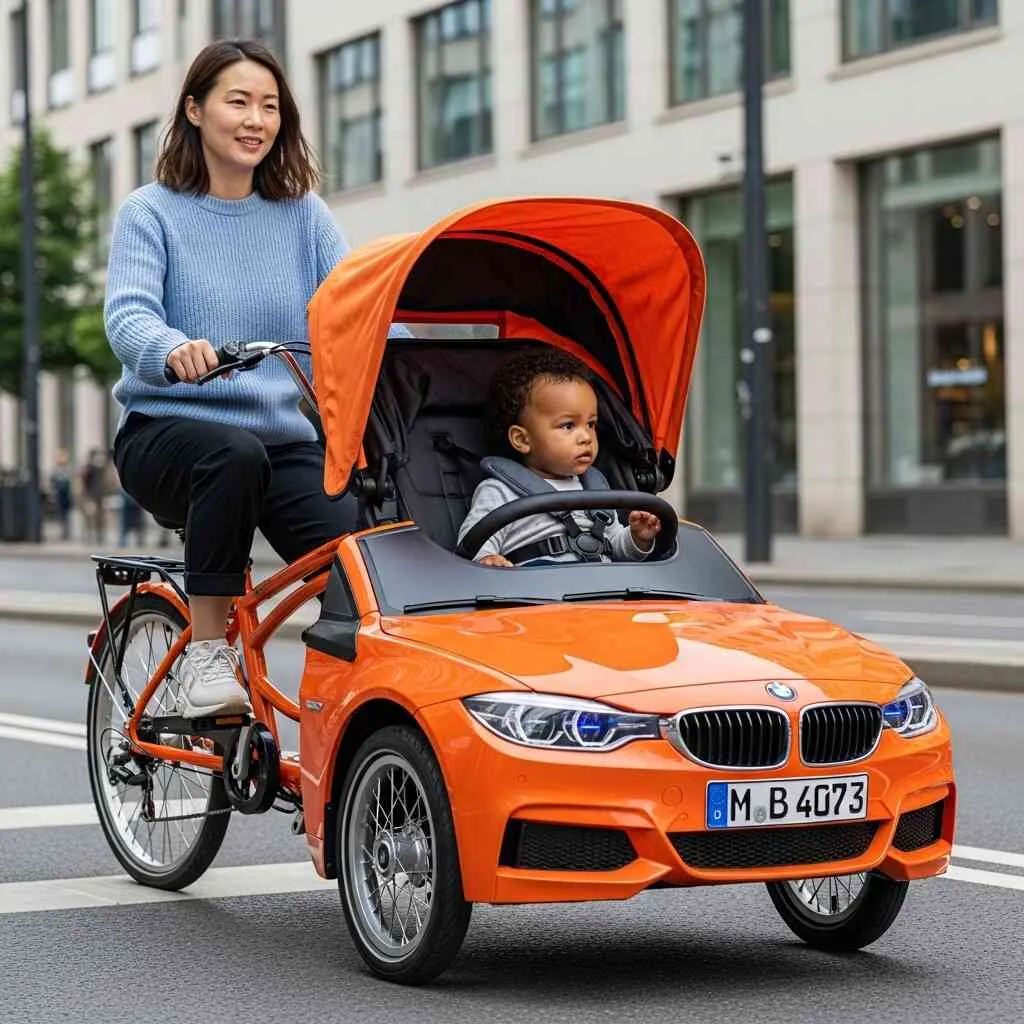
Luxury, in automotive terms, has historically meant an obsessive focus on detail: materials, ergonomics, finish, and the emotional experience of using the object. The BMW Cargo Bike Stroller applies that same discipline to human-powered transport. Rather than simply wrapping common parts with a luxury badge, a well-conceived BMW Cargo Bike Stroller should start from first principles: what does a modern family need from a vehicle that doubles as a stroller?
Designers approach this by thinking about touchpoints: how a parent leans in to buckle a child, the angle of the seat back for a nap, the tactile quality of a handrail, the fluidity of converting the cargo box into a pushable stroller. Surfaces are chosen for durability and feel — weather-resistant upholstery that’s soft, seams that won’t trap crumbs, and storage compartments placed where reaching is intuitive. The exterior styling borrows cues from BMW’s minimalist, aerodynamic aesthetic: clean lines, a compact silhouette that still looks purposeful, and a finish that reads premium without screaming elitism.
Functionality is the backbone of the design. Modular cargo systems, quick-release adapters, and intuitive locking systems allow the stroller to adapt from school run to grocery haul to neighborhood adventure. The aim: a tool that fits into daily life rather than forcing life to change around it.
Engineering & Build: Robust, Precise, and Thoughtful
At the heart of any successful cargo bike is engineering that balances weight, strength, and rideability. The BMW Cargo Bike Stroller concept embraces lightweight, high-strength materials — think aluminum or chromoly frames and selectively used composites — to keep the bike manageable while carrying heavy loads. Key engineering elements include:
- Low center of gravity: Positioning the cargo box close to the ground improves stability when loaded and reduces the chance of tipping during turns or sudden stops.
- Reinforced frame joints: Cargo bikes see concentrated stresses; reinforced welds and gusseted joints ensure longevity even under daily family use.
- Suspension systems: Front and/or rear suspension soaks up urban potholes, keeping children comfortable and protecting fragile cargo.
- Electric assist options: Pedal-assist motors offer help on hills and longer rides. Integrated battery systems can be neatly hidden within the frame, preserving aesthetics and balance.
- Reliable braking: Hydraulic disc brakes (or strong drum brakes for some designs) provide predictable stopping power, essential with heavy loads.
These engineering choices are about more than performance — they are about confidence. Parents need to feel secure every time they set off. The BMW Cargo Bike Stroller aims to offer that security through meticulous engineering.
Passenger Comfort: A Cabin for Little Humans
Comfort is not a frivolous luxury for young passengers; it’s a functional necessity. A baby or toddler’s comfort determines their mood, which directly impacts how pleasant the ride is for the whole family. The cargo box becomes a miniature cabin designed around children’s needs:
- Ergonomic seating: Contoured seats with plush, washable cushions that support posture and reduce vibrations from the road.
- Five-point harnesses: Secure restraint systems that are easy to fasten with one hand yet extremely reliable.
- Adjustable recline: Allows toddlers to nap during longer trips without constraining movement.
- Climate protection: Removable canopies, transparent rain covers, and sunshades protect from weather while maintaining airflow. Ventilation panels prevent condensation on cool days.
- Acoustic thinking: Sound-dampening materials and thoughtful shape reduce road noise, making for a calmer ride.
Designers also consider sightlines: kids should be able to see the world in front of them, and parents should be able to keep an eye on little passengers quickly. That leads to thoughtful placement of windows, mirrors, and openable lids.
Cargo & Capacity: Beyond Child Transport
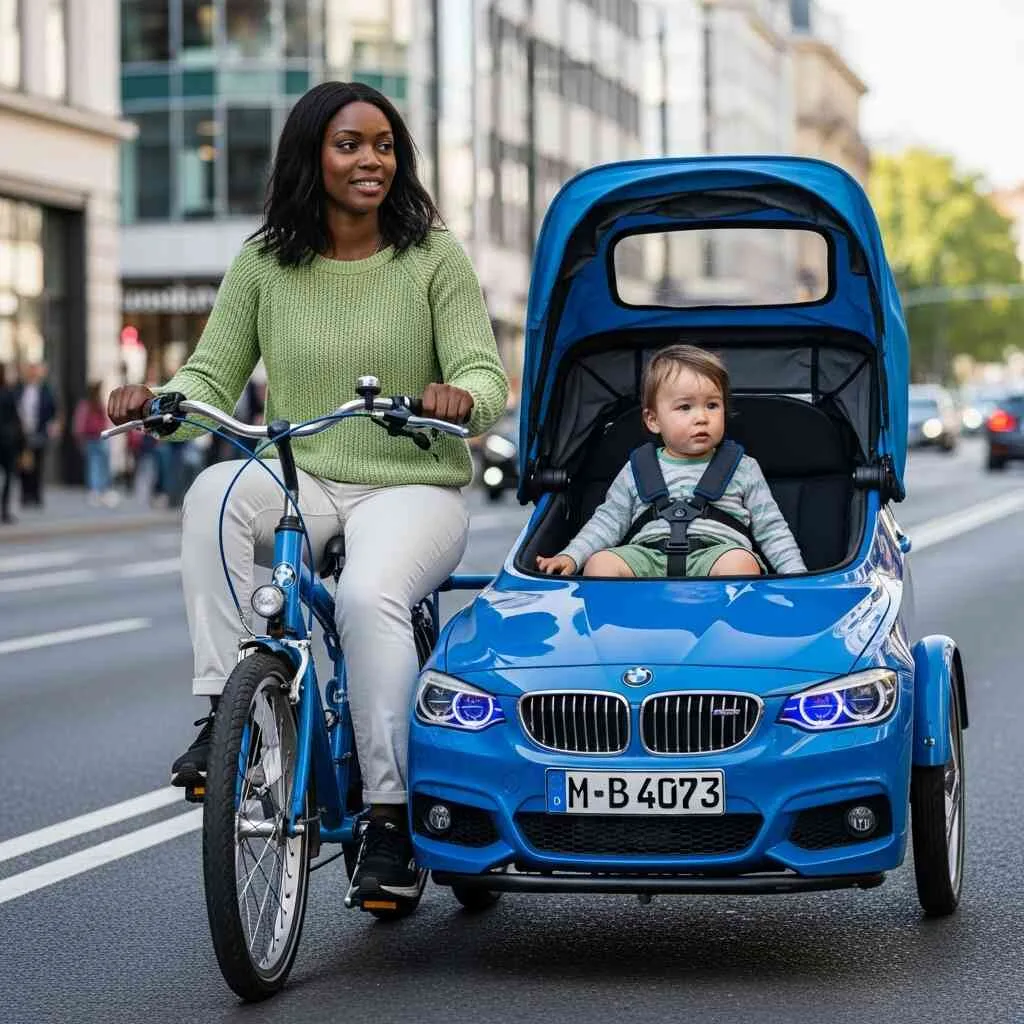
One of the most compelling appeals of a cargo bike is its versatility. The BMW Cargo Bike Stroller is not just a children carrier — it’s a moving storage unit. Families will appreciate features like:
- Modular cargo boxes: Interchangeable shells for passenger transport, flatbed conversions for bulky items, insulated compartments for grocery runs, and lockable boxes for valuables.
- Load balancing systems: Adjustable partitioning inside the box keeps items from shifting and helps distribute weight for safer riding.
- Integrated bike-and-stroller conversion: The cargo area can turn into a pushable stroller unit with a quick-release mechanism, making transitions seamless from ride to sidewalk stroll.
- Accessory compatibility: Cup holders, diaper bag hooks, bottle warmers, and even small built-in coolers can be included to expand functionality.
The message is simple: a family mobility solution must handle unpredictability. From soccer practice to impromptu picnics, the cargo bike answers the call.
Ease of Use: Making the Everyday Effortless
Even the most feature-rich design fails if it’s too cumbersome to use daily. Ease of use is central to the BMW Cargo Bike Stroller’s appeal. That means:
- Quick setup and teardown: Folding canopies, snap-fit cushions, and single-lever folding frames let parents convert the bike for storage or transit quickly.
- Maneuverability: Short turning radius for urban environments, stable low-speed handling, and parking aids such as a stable double kickstand or docking system.
- Low maintenance access: Removable battery packs, tool-free access to brakes and drivetrain, and washable interiors make upkeep straightforward.
- Smart integration: Optional smartphone apps that show battery percentage, range estimation, maintenance alerts, and GPS tracking can make ownership more convenient.
Designing for effortless use reduces friction in daily life. Parents don’t want an additional chore; they want a partner in logistics.
Safety First: Built for Peace of Mind
Safety must be the non-negotiable core of any child transport product. The BMW Cargo Bike Stroller concept integrates multiple layers of protection to create redundancy and confidence:
- Five-point harnesses and soft-padded rails to prevent bumps and abrasions.
- Rigid cargo box construction with energy-absorbing zones to help manage impacts.
- Lighting and visibility: High-mounted LED head and tail lights, side reflectors, and optional daytime running lights make the bike visible in traffic. Bright, contrasting colors and reflective fabric on the canopy add passive safety.
- Braking systems: Powerful hydraulic disc brakes combined with regenerative braking (for electric versions) provide controlled stopping even with heavy loads.
- Electronic aids: Wheel sensors that modulate power when loads shift, and stability control systems for e-assist models reduce the likelihood of loss of control in tricky conditions.
- Compliance and testing: Rigorous crash testing, compliance with child restraint regulations, and certification for use in public transport systems (where applicable) reassure buyers.
A product that carries children carries responsibility. Safety systems layered with redundancy show respect for that responsibility.
Sustainability & Urban Mobility: Replacing Car Trips
One of the most transformational promises of cargo bikes is environmental. The BMW Cargo Bike Stroller plays directly into a broader move toward low-emission urban living. By enabling many of the short trips parents traditionally make by car — school drop-offs, grocery runs, quick errands — cargo bikes reduce traffic congestion and pollution.
Electric-assist variants extend the practicality by making longer commutes and hilly terrain manageable without a car. Considering life-cycle impacts, manufacturers can also choose sustainable materials, responsibly sourced textiles, and repairable components, further reducing environmental cost.
Urban planners and families alike can view cargo bikes as an opportunity to reimagine city streets: lower speeds, more bike lanes, and a richer street-level experience for children learning to move through their neighborhood on foot and by bike.
Lifestyle Scenarios: How Families Use a Cargo Bike Stroller
To make the benefits concrete, let’s imagine a few everyday scenes:
- Morning school run: Two kids, backpacks, a lunch box, and a parent. The bike’s canopy provides weather protection; modular compartments hold lunch and a sports kit. The electric assist helps the parent tackle hills without breaking a sweat.
- Grocery and errands: Fresh produce in insulated modular crates, a foldable stroller conversion for quick sidewalk navigation, and a lockable box for purchased goods keep everything organized.
- Weekend adventure: A family pedaling to a park with picnic gear stored underneath, the children napping comfortably in reclined seats, and a long-range battery ensuring the return trip is leisurely.
- Neighborhood social life: A parent rides to a friend’s home; the cargo bike doubles as a stroller on arrival, avoiding the need to carry bulky equipment.
These scenarios highlight how a cargo-bike-as-stroller becomes more than a tool — it becomes an enabler of experiences and simpler, more social family life.
Customization & Personalization: Make It Yours
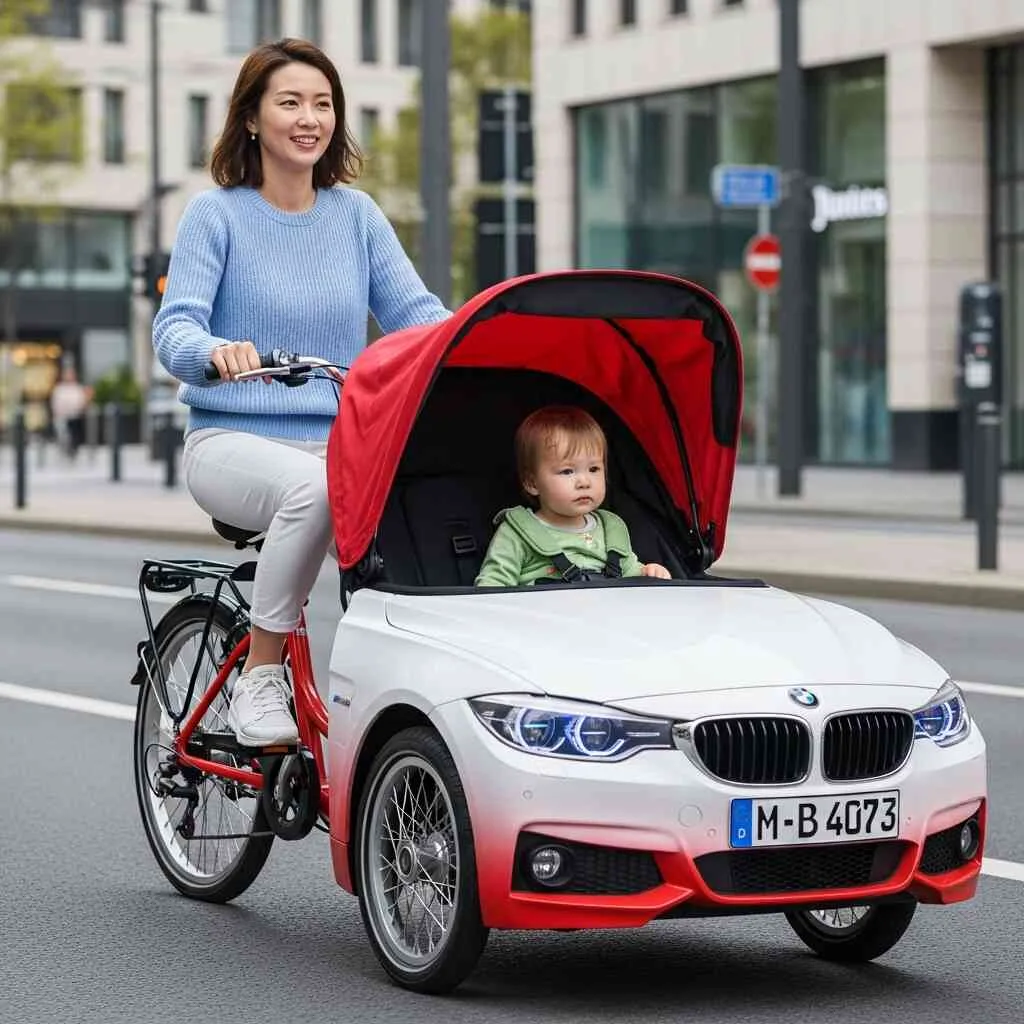
Part of the luxury proposition is the ability to personalize. The BMW Cargo Bike Stroller lends itself to a suite of customization options:
- Color and trim choices: From understated urban tones to playful pastels, finishes match family aesthetics.
- Upholstery materials: Machine-washable textiles, vegan leather, and performance fabrics balance style and durability.
- Accessory bundles: Weather kits, travel adapters, child entertainment pockets, and pet-friendly inserts turn the cargo area into a custom cabin.
- Performance options: Larger battery packs, upgraded motors, or terrain-specific tires provide choices based on the neighborhood topology.
Customization isn’t vanity; it’s about ensuring the product fits real, daily life.
Practical Considerations: Cost, Storage & Ownership
Prospective buyers must weigh practicalities. While a BMW-badged cargo bike stroller (or any high-end equivalent) may cost more than a traditional stroller or basic cargo bike, it often replaces multiple items — stroller, car trips, and sometimes a second vehicle — which changes the cost calculus.
Considerations include:
- Initial cost vs. lifecycle value: Durable components and modularity often reduce long-term ownership costs.
- Storage requirements: Foldability and modular disassembly matter for apartment dwellers. Some models offer car-rack compatibility.
- Maintenance: Regular drivetrain care, brake adjustments, and battery upkeep (for e-assist models) are part of the ownership experience.
- Insurance and theft protection: Locking systems and GPS tracking can be critical in urban areas.
Understanding the practicalities allows buyers to plan and maximize the asset’s value.
Comparing Alternatives: Stroller, Car, or Cargo Bike?
How does the BMW Cargo Bike Stroller stack up against other family mobility options?
- Versus a traditional stroller: The cargo bike extends range and payload dramatically. You can carry more than a stroller allows and cover longer distances without tiring a parent.
- Versus a car: For short trips, the cargo bike is faster in congested cities, cheaper to operate, and cleaner for the environment. It’s not a replacement for long-distance family travel but competes strongly for everyday mobility.
- Versus other cargo bikes: Premium design, engineered integration for child comfort, and a suite of convenience features distinguish a luxury cargo bike stroller from utilitarian models.
Each family’s needs differ; for many urban households, a cargo bike becomes a complement to, rather than a replacement for, a car.
Buying Guide: How to Choose the Right BMW Cargo Bike Stroller
If you’re thinking about investing in a cargo bike stroller, keep these practical tips front of mind:
- Assess your daily trips: Average distance, typical loads, number of children, and route topography inform whether you need an e-assist model.
- Test ride: Handling with and without loads can be substantially different. Try a demo with equivalent passenger or cargo weight.
- Check ergonomics: Handlebar height, step-through access, and how easy it is to strap in children will shape daily satisfaction.
- Battery & range: If you choose an electric version, consider real-world range under load and in hill conditions — not factory claims alone.
- Storage & transport: Confirm whether it fits in your home, elevator, or vehicle if you plan to transport it by car or public transit.
- Warranty and service: Look for good warranty coverage on battery and drivetrain, and ensure local service availability.
- Future-proofing: Modular systems and accessory ecosystems make a bike easier to adapt as family needs evolve.
A careful purchase process leads to years of stress-free use.

The Digital Experience: Apps & Connected Services
Modern mobility is not just mechanical; it’s digital. The BMW Cargo Bike Stroller can be imagined with a suite of connected services:
- Companion app: Battery status, range, navigation optimized for cargo bike lanes, and ride analytics.
- Maintenance alerts: Predictive notifications for brake pad wear or battery health.
- Parental features: Geo-fencing and location sharing for added peace of mind.
- Community features: Routes shared by other parents, recommended safe parking spots, and local repair shop partnerships.
A smart digital layer amplifies the hardware’s value and encourages community adoption.
Aftercare & Community: The Support Network
Ownership goes beyond the device. Strong aftercare and a supportive community amplify adoption:
- Dealer networks and workshops that can service high-end systems.
- Parent groups and community rides that help new users learn handling and best practices.
- Spare parts availability and a modular repair philosophy keep products on the road longer and reduce waste.
- Education resources on safe cargo loading, child harnessing, and urban etiquette.
Families are more likely to adopt new mobility forms when they feel supported.
The Future: What BMW Cargo Bike Stroller Signals for Cities
Finally, the BMW Cargo Bike Stroller symbolizes a broader cultural shift: a migration from car-first infrastructure to human-scale mobility. When families embrace bikes as primary vehicles for short trips, streets become calmer, public health improves, and children grow up accustomed to being active road users. Luxury brands entering this space elevate standards for safety, comfort, and design, nudging mass-market producers to improve offerings.
We can imagine future developments: fleets of shared cargo bike strollers available via subscription, integrated transit hubs with cargo-bike parking, and vehicles that seamlessly interact with traffic systems to prioritize safe, low-speed corridors for families.
Conclusion
The BMW Cargo Bike Stroller is more than a novel product idea; it’s a statement about what family mobility can — and perhaps should — look like in the 21st century. Combining automotive-grade design sensibilities with the practical, everyday intelligence of cargo bikes produces a vehicle that’s elegant, functional, and humane. It addresses real problems: the cost and inconvenience of short car trips, the desire for sustainable living, and the need to keep children safe and comfortable while moving through the city.
For families seeking to reclaim time, reduce environmental impact, and rediscover neighborhood life, the cargo bike stroller offers a compelling alternative to car dependency. Whether you’re drawn by the luxury of premium design, the joy of shared urban experiences, or the quiet satisfaction of greener choices, a BMW Cargo Bike Stroller-like solution promises to reshape daily routines into something lighter, more connected, and wonderfully human.
If you’re considering this step, test one on a real route that matters to you, imagine your weekly rhythms with it, and weigh the practicalities. The payoff is not just in saved minutes or fewer car rides — it’s in the small, accumulating moments: a nap in a sunlit canopy, a grocery haul without traffic stress, and a child’s wide-eyed discovery of the neighborhood on two wheels. That’s the future this product points toward: mobility that respects time, place, and the people who move through them.