

Why This Table Captures More Than Coffee Cups
Every home has that one piece—the object guests notice first, the anchor that quietly says who you are. For many design lovers, that piece is the wooden leopard coffee table. It’s not just furniture; it’s a sculpture with a surface, a conversation starter with a job. The leopard’s form conveys grace, speed, and unapologetic confidence, while the warmth of carved wood keeps the overall effect grounded and livable. In a world of mass-produced sameness, a wooden leopard coffee table is the perfect—and yes, uniquely personal—choice because it fuses craft, story, and function into one steadfast centerpiece.
In the pages that follow, we’ll explore what defines a wooden leopard coffee table, how to select the right version for your space, how to style and care for it, and why this distinctive design has a lasting place in interiors that value originality. Whether your aesthetic leans modern-minimal, eclectic-bohemian, or polished and classic, you’ll find that the wooden leopard coffee table can be tailored to tell your story beautifully.
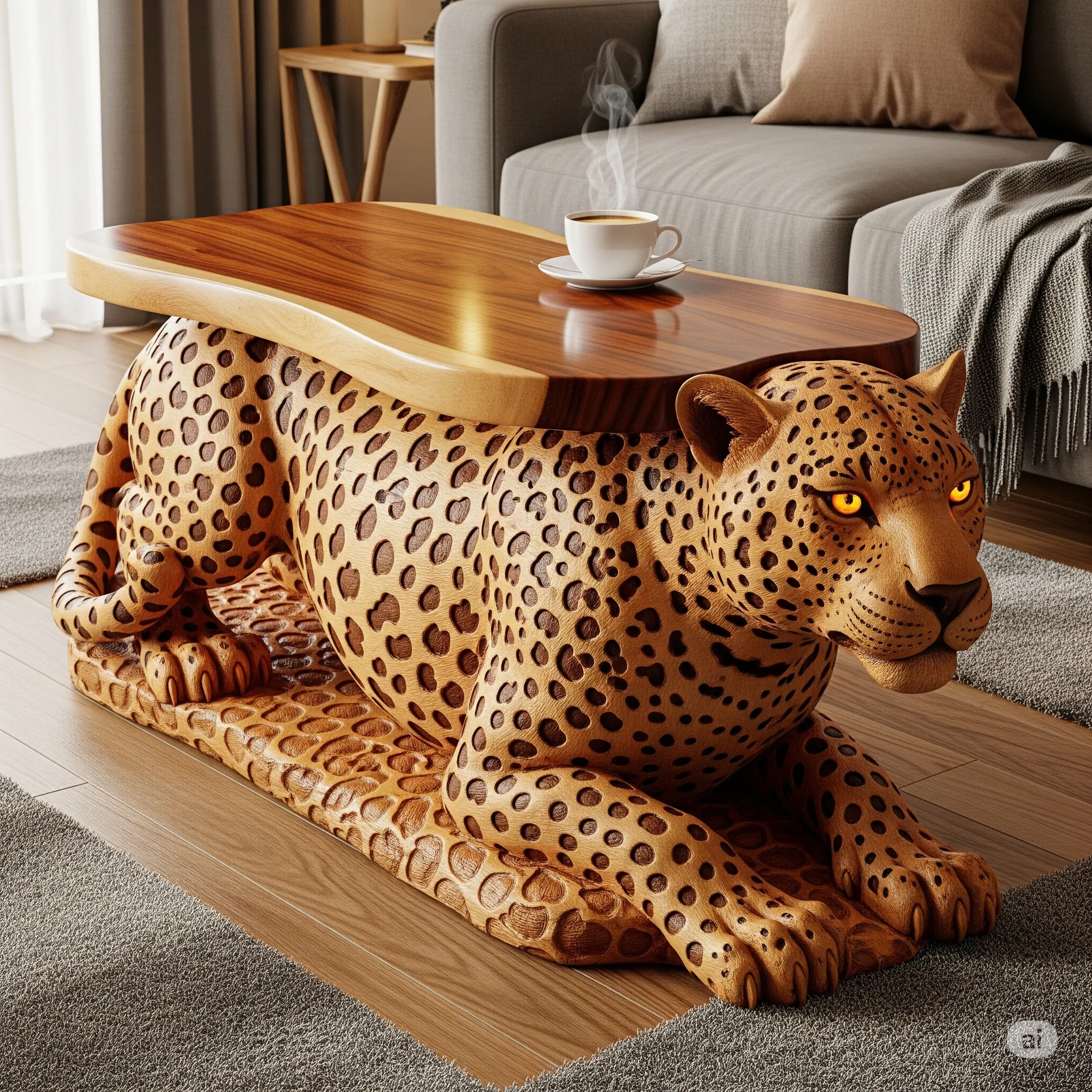
What Exactly Is a Wooden Leopard Coffee Table?
A wooden leopard coffee table is a coffee-height table—usually 15–18 inches tall—featuring a leopard as a primary design element crafted from wood. The leopard motif might be:
- Sculptural Base: A carved leopard supporting a glass, stone, or wood top, often mid-prowl or reclining.
- Relief or Inlay: A subtle leopard figure (or the cat’s distinctive rosettes) inlaid into the wooden top using marquetry.
- Structural Details: Legs shaped as stylized paws, tails curling as supports, or corner blocks that reference a leopard’s features.
- Patterned Surface: Burned or engraved rosette patterns across the tabletop, producing texture without overt figurative carving.
What unites these variations is the same core idea: the power and elegance of the leopard articulated through woodcraft, delivering a piece that’s both usable and artful.
Why It’s the Perfect and Unique Choice
1) It’s Design That Speaks
A wooden leopard coffee table announces a point of view. Where standard coffee tables fade into the background, this one interacts with the room like a character. It’s perfect because it solves a practical need while elevating the emotional temperature of a space—warmth, drama, personality—all from a single piece.
2) Symbolism with Substance
Leopards symbolize agility, independence, and quiet strength. These are attractive qualities to bring into a living room: the sense of poise and readiness, a touch of wilderness that feels timeless rather than trendy. The wooden leopard coffee table pairs that symbolism with authentic materiality; wood’s tactile grain and subtle scent evoke nature as much as the motif does.
3) Versatility Across Styles
- Modern/Minimal: Choose a lean, black-stained carving with a clear glass top for a crisp silhouette and light footprint.
- Eclectic/Bohemian: Go for hand-carved mango or acacia with a warm oil finish, layered with plants and textiles.
- Classic/Luxe: Opt for walnut or mahogany with brass-capped feet and a bevelled wood or smoked-glass top.
The form is unique, but the finishes and details can meet your style exactly where it lives.
4) Heritage Craft in the Age of Flat-Pack
A wooden leopard coffee table often requires hand carving, careful joinery, and thoughtful finishing. You feel that craft under your fingertips each time you set down a book or cup. Uniqueness isn’t a decal—it’s built into the fibers of the piece.
5) A Long-Lived Investment
Wood ages beautifully. With the right care, a well-made wooden leopard coffee table develops patina rather than wear, shifting from “new” to “beloved” without losing integrity. And unlike purely trend-driven designs, the leopard’s classical natural form keeps it from dating out.
Materials and Craftsmanship: What to Look For
Choosing the Wood Species
- Walnut: Deep, sophisticated tone with tight grain; suits luxe or mid-century rooms.
- Oak: Strong, visible grain; excellent for modern rustic or Scandinavian aesthetics.
- Teak: Naturally oily and resilient; pairs well with glass tops and indoor–outdoor adjacency.
- Acacia: Dense and durable; often shows dynamic grain patterns for visual interest.
- Mahogany: Stable, resonant color; ideal for traditional or formal environments.
- Mango Wood: Sustainable (often a byproduct of fruit farming) with lively grain; great for bohemian/eclectic spaces.
Each wood carries a personality. Walnut whispers understated elegance; mango sings with joyful, organic variation. When evaluating a wooden leopard coffee table, run your hand along the grain—do you want silky smooth, or do you prefer texture that reveals tool marks and the carver’s hand?
Carving and Detailing
- Hand-Carving vs. CNC: CNC can achieve remarkable consistency; hand-carving gives slight irregularities that feel alive. Many exceptional pieces combine both.
- Proportions: Look at limb thickness, musculature, and facial expression. A leopard should read as agile, not bulky or stiff.
- Surface Finish: An oil-and-wax finish protects while maintaining a natural feel; catalyzed lacquer offers higher protection and sheen. Gloss levels should match your décor.
Joinery and Structure
- Top Attachment: A sculptural base supporting a glass or wood top should distribute weight evenly; hidden brackets or suction discs for glass are common.
- Leg Stability: If the leopard is part of the support structure, ensure contact points are broad and flat to prevent rocking.
- Underside Quality: Flip or peek underneath—clean routing, sealed surfaces, and tidy fasteners signal care.
Design Variations and How to Choose
Sculptural Base + Glass Top
Best for: Smaller rooms, modern spaces, or where a lighter visual footprint is needed.
Why: Glass lets the carving read clearly, keeps sightlines intact, and bounces light around the room.
Fully Wooden Top with Carved Leopard
Best for: Traditional rooms or spaces needing warmth.
Why: A continuous wood plane feels substantial and showcases joinery and finishing skill.
Inlay or Marquetry Leopard Motifs
Best for: Minimalists who want subtlety.
Why: The leopard is present as pattern rather than figurative sculpture—quiet but distinctive.
Mixed Materials (Wood + Brass, Wood + Stone)
Best for: Luxe or eclectic schemes.
Why: Brass accents echo jewelry; stone adds grounding and practicality for heavy use.
Size and Scale Guidelines
- Height: 15–18 inches typically aligns with sofa seat height; aim for within 1–2 inches of your sofa’s cushion height.
- Length: For a standard 84-inch sofa, a 42–54-inch table works; if you have sectionals, consider round or oval forms for easier circulation.
- Clearances: Maintain 14–18 inches from sofa edge to table; 30–36 inches for primary circulation paths around the group.
Styling the Wooden Leopard Coffee Table
Modern Minimal Mood
- Palette: Charcoal, bone, and natural wood.
- Table Choice: Black-stained walnut or ebonized oak leopard base with a clear glass top.
- Accents: One large ceramic bowl, a slim metal tray, and a single art book. Negative space is your friend.
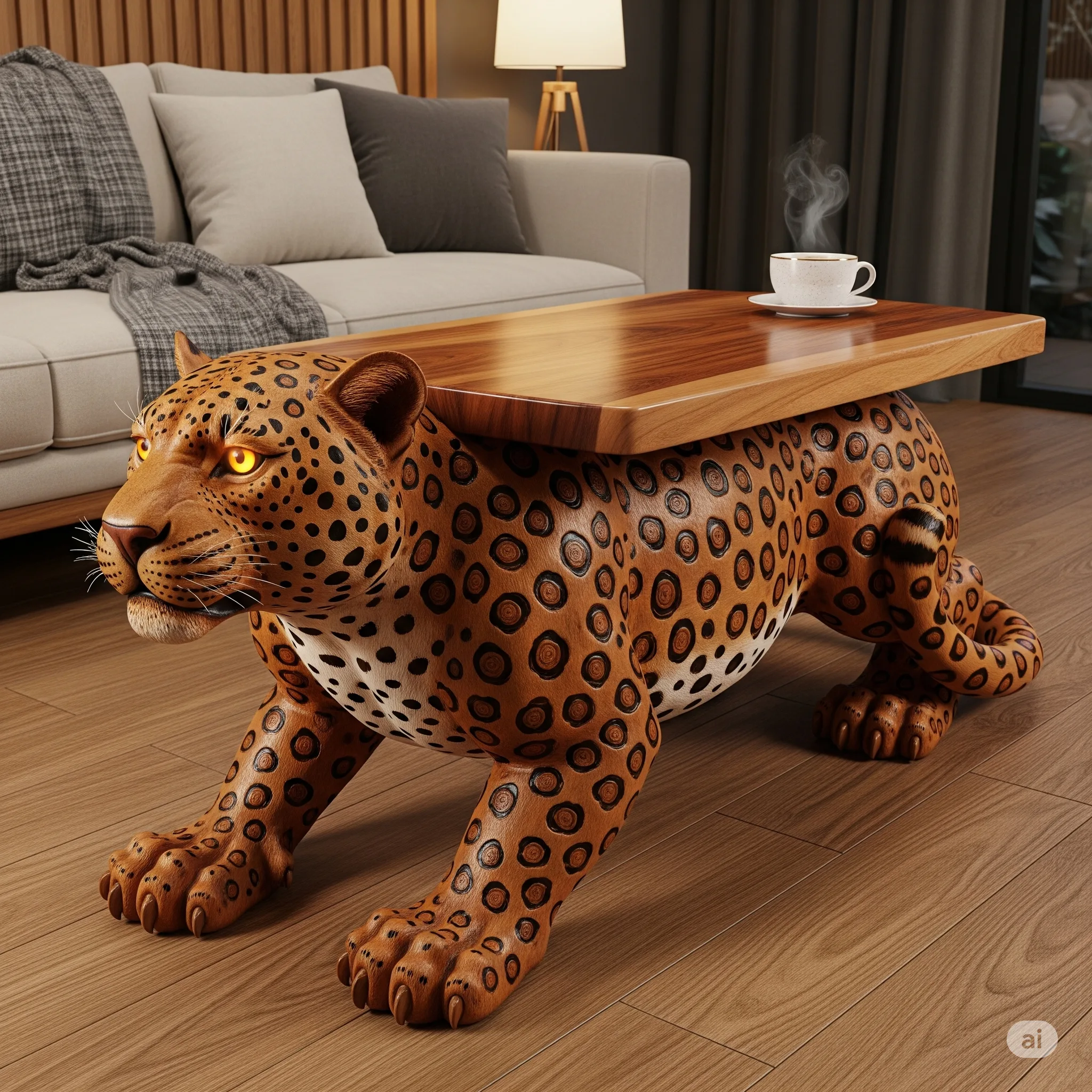
Bohemian & Collected
- Palette: Terracotta, teal, moss, and brass.
- Table Choice: Hand-carved mango with a matte oil finish.
- Accents: Layered woven coasters, stacked travel books, and a small potted fern. Invite texture and story.
Classic & Luxe
- Palette: Deep jewel tones with warm metals.
- Table Choice: Mahogany or walnut with brass feet and a beveled wood top.
- Accents: Crystal low bowl, lacquered box for remotes, and a candle snuffer—ritual meets elegance.
Safari-Chic Adventure
- Palette: Camel, espresso, olive, and bone.
- Table Choice: Acacia or teak with subtle carved rosettes; glass or live-edge wood top.
- Accents: Leather coasters, vintage field guides, and a shallow tray for found objects.
Room-by-Room Ideas
Living Room Focal Point
Place a wooden leopard coffee table at the center of a seating arrangement. Balance its visual weight with a rug that extends at least 6–10 inches beyond the table on all sides, and echo the leopard’s lines with a curved sofa or rounded armchairs to keep the flow dynamic.
Home Office or Library
A smaller-scale version provides a bold counterpoint to books and leather. Use it as a side table in a reading nook, or pair two in front of a settee for modular flexibility.
Boutique Hospitality Vibe
In a lounge, waiting area, or studio, the piece becomes a brand signature. If the table sits in a high-traffic space, opt for a durable finish and tempered glass top, and protect the wood base with clear bumpers.
Practical Care and Maintenance
- Daily Wipe-Down: Dust with a soft, dry cloth.
- Spill Protocol: Blot, don’t rub. Follow with a slightly damp cloth, then dry immediately.
- Coasters & Trivets: Always use them—especially on oil finishes.
- Sunlight: Avoid prolonged direct exposure; rotate décor seasonally to even out light effects.
- Humidity: Aim for stable indoor humidity to prevent movement; avoid placing near heating vents.
- Scratch Touch-Ups: For light surface marks, use a matching wax stick; for deeper issues, consult a restorer.
- Glass Care: If your wooden leopard coffee table has a glass top, choose non-ammonia cleaners and spray the cloth, not the glass, to avoid drips onto the wood.
Sustainability and Ethics
A wooden leopard coffee table can be a responsible choice when you:
- Choose Responsible Woods: Look for sustainably sourced species or reclaimed timbers. Mango wood is widely regarded as a more sustainable option because it’s harvested after the fruiting lifecycle.
- Support Skilled Makers: Artisanship sustains communities and keeps traditional carving alive.
- Buy Once, Keep Forever: Longevity is the greenest feature. A timeless statement piece prevents the cycle of yearly replacement.
Budget, Value, and Authenticity
Price Drivers
- Carving Complexity: Deep, naturalistic musculature and expressive features cost more than stylized silhouettes.
- Wood Species & Thickness: Dense hardwoods and thick tops add durability (and weight).
- Finishing: Multi-step finishing yields a richer look and better protection.
- Custom Work: Bespoke dimensions, stains, or inlays increase price but also ensure perfect fit.
Spotting Quality
- Balance & Stability: Gently rock the table—any wobble suggests uneven feet or inadequate base geometry.
- Crisp Detailing: Look at the leopard’s eyes, paws, and tail; clarity here indicates careful time investment.
- Finish Integrity: Even sheen, no drips or rough patches; protected end grain at edges.
Long-Term Value
A standout piece like a wooden leopard coffee table holds visual value even as tastes evolve. Its artistic aspect and durable build can enhance resale desirability, but more importantly, it provides enduring satisfaction—value you feel daily.
The Buying Checklist (So You Get It Right the First Time)
- Measure Your Seating: Seat height, sofa length, and the distances between furniture pieces.
- Choose Your Top: Glass for lightness and visibility; wood for warmth and solidity; stone for durability.
- Pick Your Finish: Consider how you live—children, pets, entertaining—and match finish durability accordingly.
- Confirm Clearances: 14–18 inches to seating; ensure door swings and traffic routes remain easy.
- Test Stability: Especially with sculptural bases; ask how the top affixes to the base.
- Assess Maintenance Fit: Can you live with occasional oiling? Do you prefer a wipe-and-go lacquer?
- Request Maker Details: Provenance adds meaning and often better aftercare support.
Common Mistakes to Avoid
- Scale Mismatch: A giant leopard under a tiny loveseat overwhelms; an undersized table floats in a grand room.
- Over-Accessorizing: Let the carving breathe. A tray, a book, a single bowl—done.
- Ignoring Natural Light: Strong sun can fade dark stains; place thoughtfully or use window treatments.
- Skipping Protection: No coasters on oil finishes is a fast track to rings and stress.
- Not Considering Edges: If you have small kids, a rounded glass or oval top eases concerns around sharp corners.
Commissioning or Customizing Your Piece
A custom wooden leopard coffee table lets you specify pose, dimensions, wood, and finish:
- Pose & Personality: Do you want mid-stride dynamism or a lounging cat’s calm?
- Top Shape: Round keeps flow open; rectangle grounds a long sofa; oval blends the two.
- Color & Stain: Natural oils showcase grain; darker stains push contemporary or formal.
- Subtle Details: brass pins, leather-wrapped feet, or a carved signature plaque.
Provide sketches or reference images. Clarify your daily use (kids, pets, frequent entertaining) so the maker can recommend structure and finish that suit your life.
Integrating With Rugs, Lighting, and Seating
- Rugs: Choose a rug that extends beyond the table and front legs of seating. Neutral rugs highlight the table; patterned rugs can pick up the leopard’s rosette rhythm.
- Lighting: Low, warm lighting emphasizes carving shadows. A floor lamp angled to graze the base will dramatize the feline musculature at night.
- Seating: Curved forms echo the cat’s lines; structured seating creates contrast. Either works—just be intentional.
The Emotional Payoff
Design isn’t just about function—it’s about feeling. A wooden leopard coffee table brings a note of calm strength into your home. It reminds you that elegance and power can be quiet; that beauty can also be useful; that the wild and the domestic can coexist gracefully. Every time you cross the room, every time a guest leans in to look closer, you’ll experience that click of recognition: this is your home’s voice.
FAQs
Is a wooden leopard coffee table too “themed” for a modern home?
Not if the lines are clean and the finish is restrained. Pairing a sleek black base with a glass top feels sculptural, not kitschy.
How do I keep the carving from collecting dust?
Use a soft brush attachment on a vacuum at low suction once a week, then a quick wipe with a microfiber cloth.
Glass or wood top—which is better?
Glass keeps sightlines open and showcases the carving. Wood creates a continuous, warm plane and hides fingerprints. Choose based on use and the mood you want.
Will it clash with patterned rugs or bold art?
No. The key is repetition: echo the leopard’s curves in one other element (a round ottoman, an arched lamp) and keep surrounding accessories edited.
What about small spaces?
Opt for a smaller diameter round glass top; you’ll still get presence without visual heaviness.
Three Mini Vignettes to Inspire You
- City Loft, Minimal Soul: A black-stained walnut leopard in a low crouch supports an oval glass top. Concrete floors, a pale linen sofa, one oversized fig tree. The table becomes a shadow-drawing in the afternoon light—restrained yet magnetic.
- Sunlit Bungalow, Collected Life: Honey-toned mango wood, hand-carved rosettes across a solid top. Jute rug, stacks of travel books, a brass bowl for keys. Friends touch the edge and ask where you found it. You tell the story of the maker; the table becomes a memory bank.
- Classic Apartment, Timeless Layering: Mahogany base with brass-capped feet, smoked glass top, emerald velvet sofa. The leopard’s tail curves to meet the floor gracefully. In the evening, a picture light grazes the carving, and the table hums with quiet luxury.
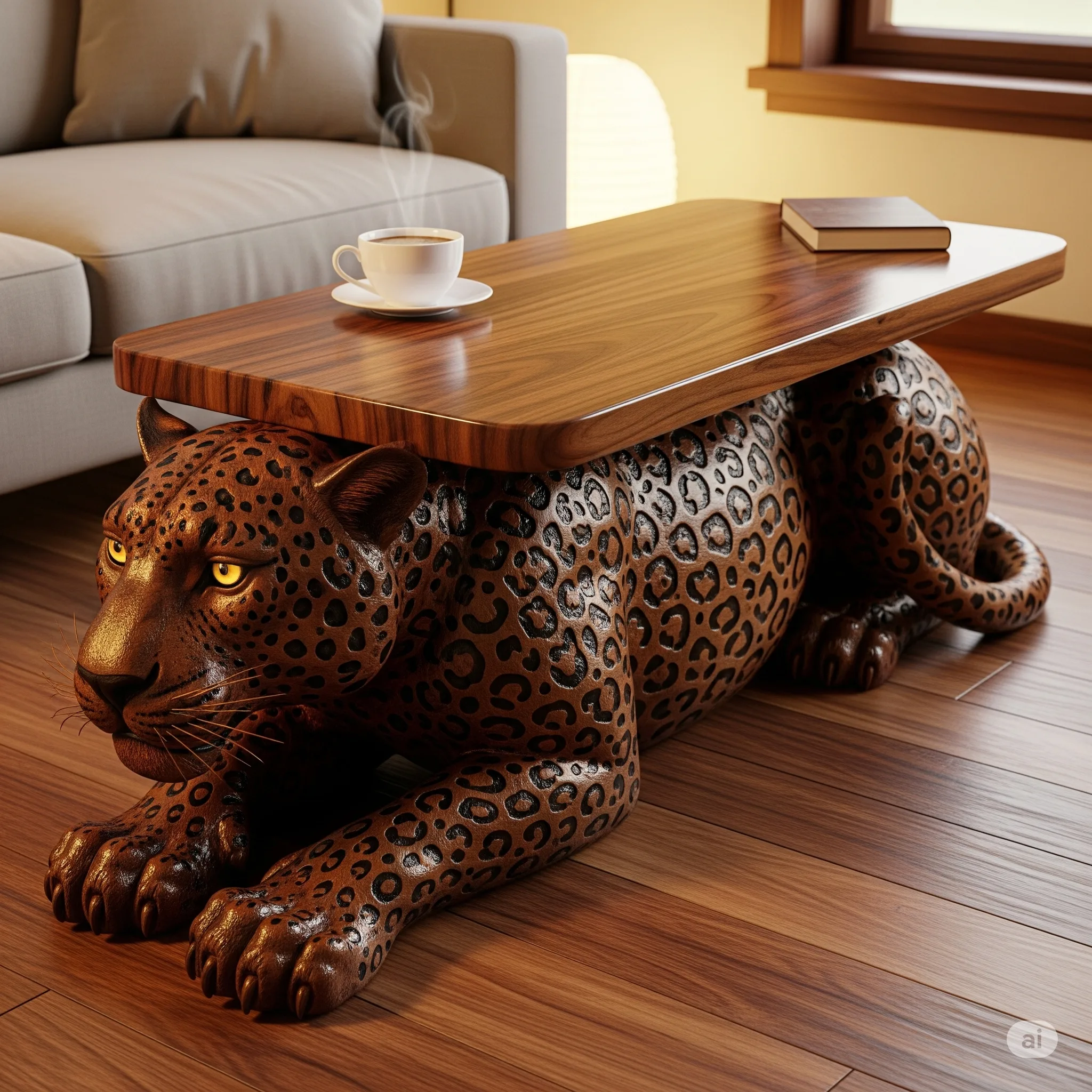
A Singular Piece That Earns Its Place
In a marketplace full of interchangeable rectangles, the wooden leopard coffee table is the rare object that fuses sculpture, symbolism, and daily function—making it genuinely the perfect and unique choice. It brings the strength and elegance of the leopard into your living room, grounding the scene with natural materials and masterful craft. It adapts to many aesthetics, from modern to bohemian to luxe, while always retaining its self-possessed character. And with thoughtful care, it will look better each year, acquiring the kind of patina only time can grant.
Choose the scale that fits your room. Decide on the top and finish that fit your lifestyle. Invest in quality, and then keep the styling simple so the form can speak. When guests gather, when mornings are quiet, when evenings stretch long and warm—the wooden leopard coffee table will be there at the heart of it all: poised, beautiful, and unmistakably yours.