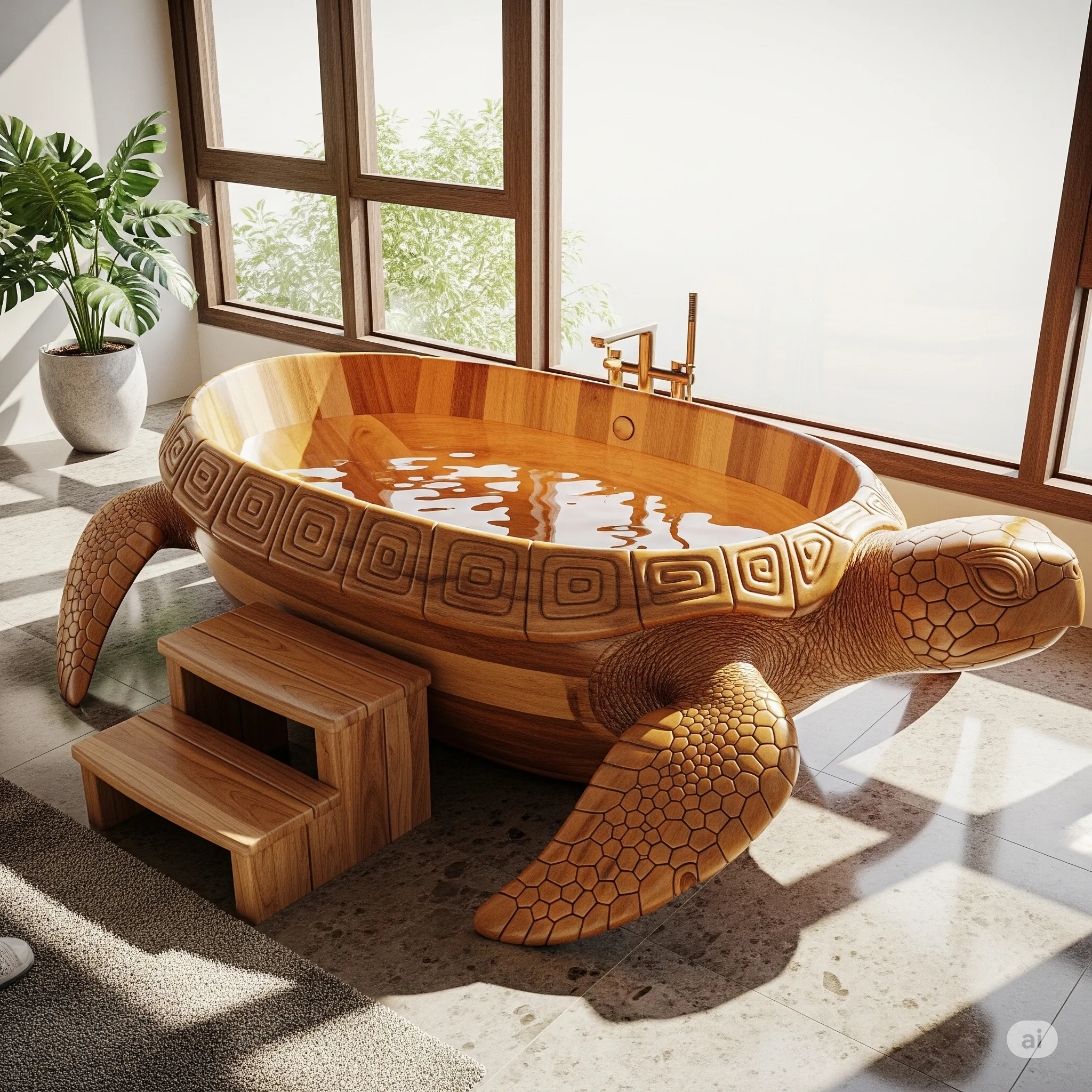
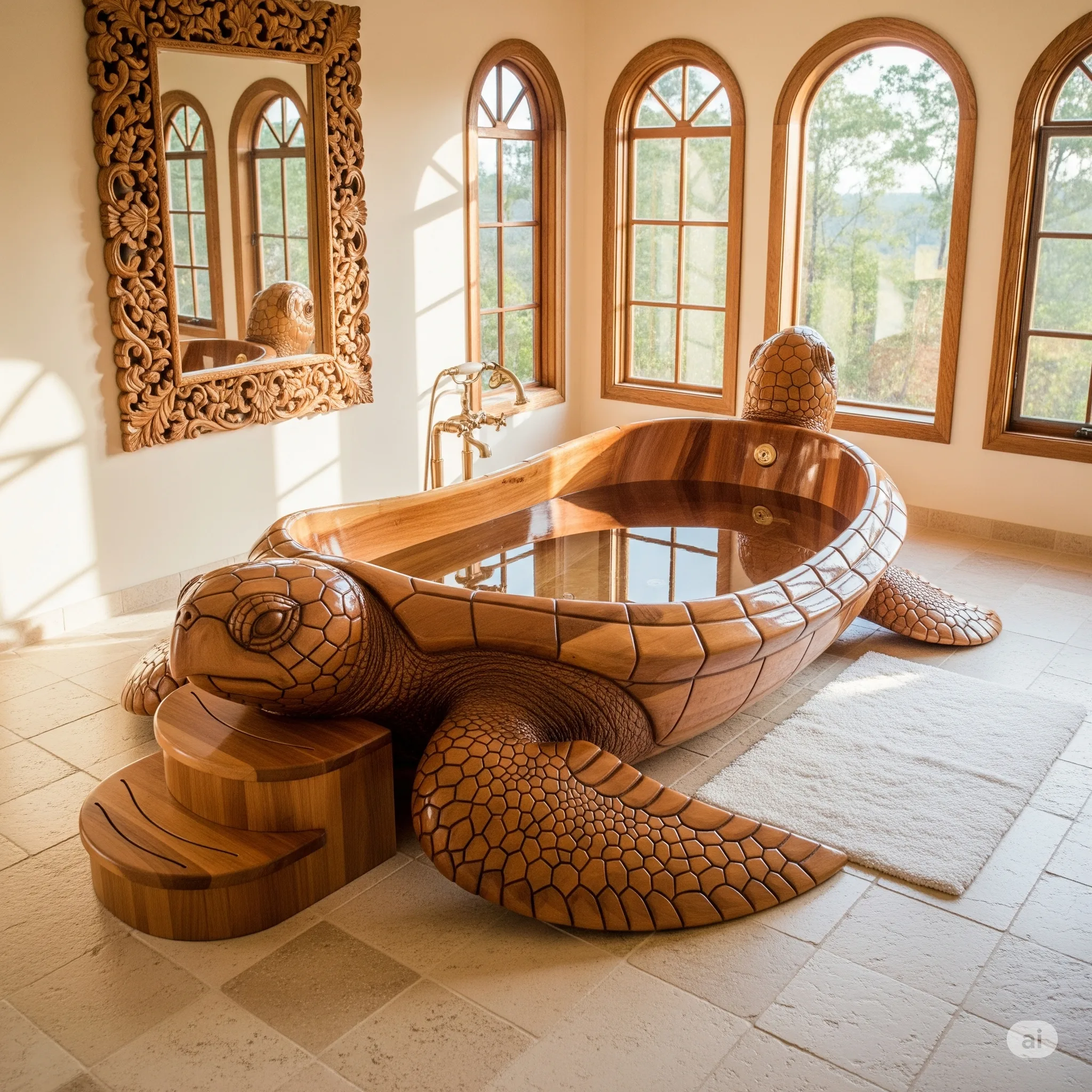
A Bathtub That’s Part Sculpture, Part Sanctuary
A wooden turtle bathtub is more than plumbing and water—it’s a marriage of craft, symbolism, and bathing ritual. Imagine a tub carved or constructed to echo the rounded shell of a turtle: calm, ancient, reassuring. Whether freestanding in a spa-like master bath, nested in an outdoor pavilion, or commissioned as a statement piece for a boutique resort, wooden turtle bathtubs invite a different kind of bathing: slower, sensory, and intentional. They bring together the natural warmth of wood, the tactile pleasure of a handcrafted object, and the cultural resonance of the turtle as a symbol of longevity, protection, and groundedness. This article explores why wooden turtle bathtubs can be the perfect and unique choice—for homeowners, designers, hoteliers, and anyone who values ritualized self-care—and how to select, install, and care for one so it remains beautiful and functional for years.
The Meaning Behind the Design: Why a Turtle?
The turtle is a pervasive symbol across cultures. In many traditions it stands for longevity, patience, shelter, and a calm inner life. Translating that iconography into a bathtub gives the fixture immediate emotional weight: the outer shell becomes a literal shelter for the bather; the rounded form encourages curling and stillness; the material—warm, tactile wood—emphasizes connection to nature. Designers use turtle-inspired geometry not only for visual interest but to shape the bathing experience. A wide, crescent-shaped rim suggests perching or pouring; a gently sloped backrest evokes a turtle’s carapace curve and supports long soaking sessions. In short, a wooden turtle bathtub is both a visual metaphor and a functional device for stillness.
Historical and Cultural Roots: From Ofuro to Modern Sculptures
Wooden tubs have a deep history. Japan’s ofuro—deep, often cedar or hinoki tubs designed for soaking—exemplify how wood, steam, and water can coexist beautifully when crafted with knowledge and respect for materials. Scandinavian and Baltic regions have traditions of wooden hot tubs and baths heated outdoors. The wooden turtle bathtub is a contemporary evolution that borrows from these traditions while adding sculptural form and narrative. Craftspeople trained in coopering, boatbuilding, or furnituremaking bring techniques such as staving, steam-bending, lamination, and precise joinery to create watertight, enduring vessels. The modern wooden turtle bathtub occupies a place where cultural ritual, artisanal skill, and contemporary design intersect.
Design Varieties: Forms of the Wooden Turtle Bathtub
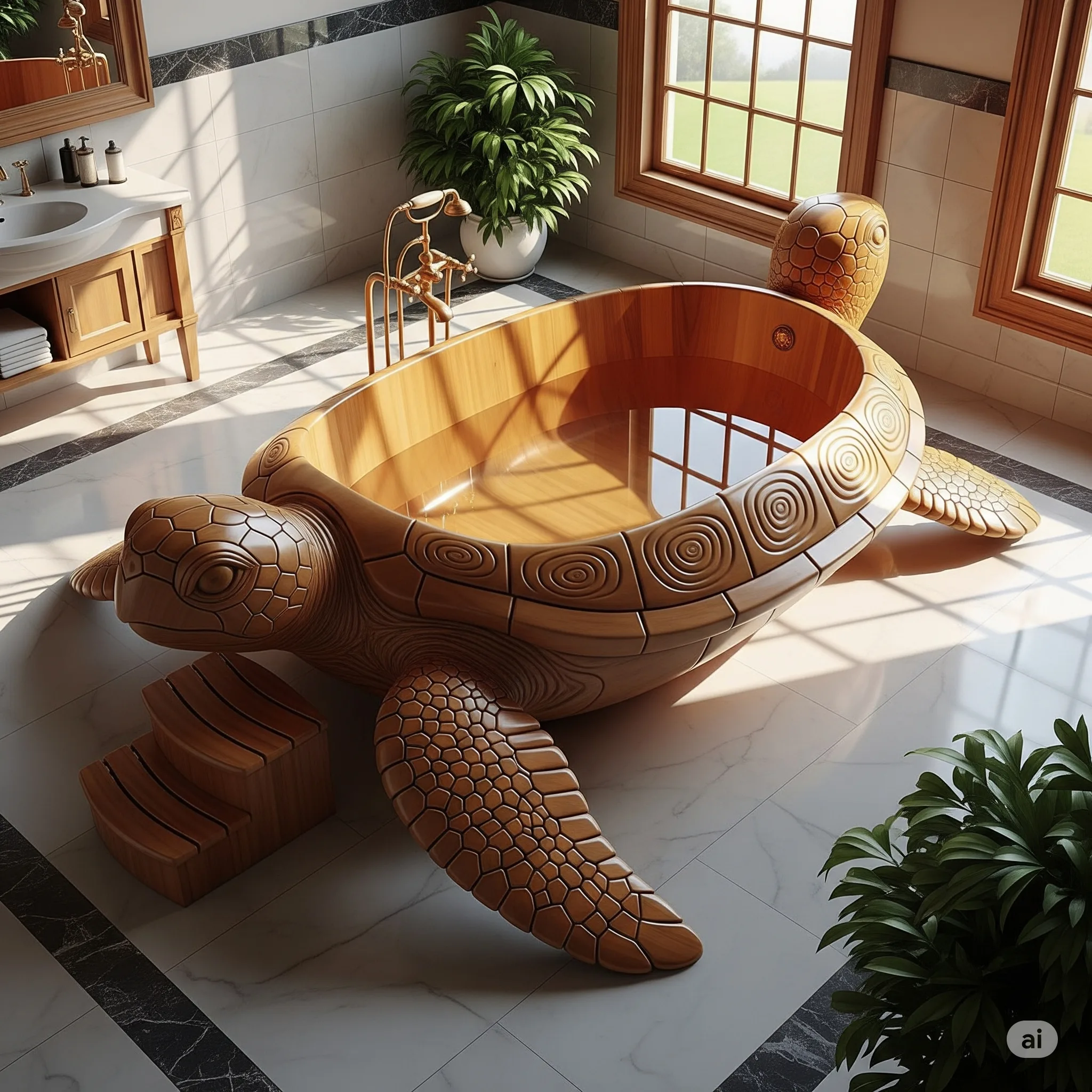
Wooden turtle bathtubs come in several typologies, each delivering a different aesthetic and functional outcome:
- Stave Construction Turtle Tubs: Similar to a wooden barrel or old-style ofuro, these tubs are built from vertical staves bound by metal bands or an internal hoop. The staves are cut and beveled so that when tightened they create a tight, watertight seam. The turtle shell silhouette may be achieved by shaping the rim and adding sculpted external panels.
- Carved Solid-Form Turtle Tubs: Artists can hand-carve a tub out of a large timber block or a lamination of boards. The shell curvature is sculpted in the round. This approach yields organic forms but requires exceptional material preparation and sealing.
- Laminated Shell Turtle Tubs: Thin veneers are glued over a mold (form) to create a continuous, curved shell. Lamination allows complex curvature and lighter weight than solid timber. External grain patterns and exotic veneers create striking visuals.
- Hybrid Wooden-Interior Tubs: These models combine an inner watertight shell—stainless steel, copper, or fiberglass—with a decorative wooden exterior shaped like a turtle. The interior handles water and sanitation; the wooden exterior provides thermal buffer and aesthetics.
- Outdoor Soaking Turtles (Hot Tubs): Larger wooden turtle-shaped tubs designed for outdoor use, often heatable by wood-fired furnaces or integrated electric heaters. These prioritize insulation, drainage, and durable joinery.
- Children’s or Themed Turtle Tubs: Scaled-down, playful versions for luxury childcare centers, boutique hotels, or themed homes—often molded from treated timber or composites for easier maintenance.
Each type addresses different priorities: pure wooden interiors emphasize sensory warmth and tradition; hybrids emphasize practicality and lower maintenance.
Materials & Timber Choices: What Makes a Wooden Tub Last?
The success of any wooden bath is rooted in material selection. Key options include:
- Hinoki (Japanese Cypress): Revered in Japan for its aroma, fine grain, and natural resistance to rot and mold. Hinoki is ideal for indoor soaking tubs and is central to traditional ofuro construction.
- Teak: Dense, oily, and famously stable, teak resists moisture and decay—excellent for both indoor and outdoor tubs. Its natural oils reduce the need for aggressive sealants.
- Cedar: Western red cedar and other cedars are lightweight and naturally decay-resistant, offering warm tones and a pleasant scent. Often used in larger soaking tubs and hot tubs.
- Iroko, Oak, and Other Hardwoods: Some craftsmen use durable hardwoods treated and finished correctly. These are robust but require careful drying and finishing to avoid cracking.
- Reconstituted or Engineered Timber: Laminated veneers and engineered cores (marine plywood, laminated birch) reduce movement and provide predictable structural performance. They are often used for laminated shell tubs.
- Exterior Cladding Materials: For hybrid tubs, the visible shell might be cedar shakes, teak slats, or sculpted laminated veneers, while the inner shell is a metal or composite liner.
When choosing timber, prioritize species with natural rot resistance or apply finishes and construction methods that negate weak fibers or high-moisture vulnerability. Sourcing decisions should also consider sustainability (FSC-certified wood where possible).
Construction Techniques: How Wooden Turtle Bathtubs Are Made
Several traditional and contemporary techniques are used:
- Coopering: Staves are cut with precise bevels, assembled into a round or oval shape, and tightened with bands so the wood’s own swelling with water produces a watertight seal. Perfect for deeper, vertical-sided tubs.
- Steam Bending: To create the gentle curves of a shell, planks are steamed and bent around molds, then laminated and glued. Steam bending preserves grain continuity along curves.
- Cold Lamination/Molded Veneer: Thin veneers are glued over a pre-shaped mold and compressed to create a seamless curved surface. This method allows complex shell contours and efficient use of wood.
- Carving & Hollowing: A larger block or laminated billet is carved to create the vessel interior. This technique is sculptural and yields one-of-a-kind pieces.
- Lining & Seal Systems: Even solid-wood tubs often include interior sealing—multiple coats of marine-grade varnish, tung or tung-oil blends, epoxy barriers, or internal metal liners to ensure sanitation and minimize wood swelling cycles.
- Mechanical Reinforcement: Hidden reinforcing rings, ribs, or stainless-steel bands keep bowing and deformation at bay in larger installations or outdoor tubs subject to freeze-thaw cycles.
Expert builders combine empirical knowledge—how wood behaves when wet—with modern adhesives and coatings to produce tubs that both perform and age gracefully.
Waterproofing, Lining & Finishes: Balancing Breathability and Durability
One of the most important technical challenges is keeping the tub watertight while allowing wood to breathe. Strategies include:
- Traditional Seasoning: Some ofuro-style tubs are left largely unsealed; they rely on the wood’s natural oils and on the wood swelling slightly when wet to create a seal. This approach favors specific species like hinoki or teak.
- Modern Sealants: Marine-grade epoxy or polyurethane varnishes provide near-impenetrable barriers. Epoxies offer excellent protection but can create an absolute barrier that impedes wood breathing—careful choice and professional application are necessary.
- Oil Finishes: Tung oil, linseed oil, or specially formulated tung blends preserve wood grain and are easily renewed. They are more breathable but require periodic reapplication and higher upkeep.
- Composite or Metal Liners: An interior stainless-steel or copper liner handles water, while the wood exterior remains decorative and insulating. This method simplifies sanitation and reduces maintenance.
- Food-Safe Coatings: For tubs used for sensory or spa baths, ensure finishes are non-toxic and rated for human contact. Avoid finishes containing volatile solvents that can off-gas into the bathwater.
- Maintenance-Friendly Choices: Consider how often you are willing to sand and reseal. Fully finished epoxy tubs may be lower maintenance but feel colder to the touch; oiled wood feels warmer but needs seasonal attention.
A responsible craftsman will recommend a finish system that suits your climate, usage patterns, and aesthetic priorities.
Plumbing, Heating & Technical Integration
Installing a wooden turtle bathtub can be more complex than a standard acrylic tub. Considerations include:
- Drainage Systems: Hidden drains integrated into the tub bottom, often with stainless-steel fittings and a compression flange to keep seal integrity. Overflows must be planned to prevent accidental overfill and water intrusion into structures.
- Rim and Deck Integration: If the tub sits on a deck, account for joist-loading; the filled tub is heavy. Reinforce the floor or construct a dedicated base for freestanding outdoor installations.
- Heaters & Jet Systems: For whirlpool or heated recirculating options, choose components that remain isolated from direct wood exposure. Inline heaters and pumps can be mounted outside the wooden shell and connected via flexible fittings.
- Insulation: For outdoor hot tubs, insulation below the tank and between outer cladding and liner reduces heat loss. Insulation must not trap moisture against the wood.
- Water Treatment: Warm wooden vessels can benefit from filtration and gentle sanitation regimes—ozone, UV, or low-level chlorine recommended by a professional. Harsh chemicals can degrade wood finishes.
- Access Panels: Provide access to pumps, heaters, and drain fittings for service. In hybrid designs this is straightforward; in full-wood sculptures, clever removable sections or hidden hatches are necessary.
Work with experienced plumbers and tub fabricators to ensure code compliance and reliability.
Where Wooden Turtle Bathtubs Work Best: Indoor & Outdoor Applications
- Master Bathroom Statement Piece: A sculptural wooden turtle tub becomes the visual anchor in a spa-like master suite, ideally near natural light and warm finishes.
- Boutique Hotels & Spas: A turtle-shaped plunge in a private suite or an outdoor soak pavilion offers memorable guest experiences.
- Garden Pavilions & Retreats: Outdoor wooden hot tubs shaped like turtles fit rustic or woodland landscapes, pairing with pergolas and private greenings.
- Wellness Centers: Incorporate wooden turtle bathtubs in float therapy or archetypal bathing rituals for clients seeking tactile connection.
- Children’s Play & Sensory Spaces: In controlled, supervised settings, scaled-down versions bring playful ritual to educational or hospitality experiences.
Site selection must consider load-bearing, exposure, and maintenance logistics.Distinctive Turtle-Inspired Design
Shaped by the Sea
Many models draw inspiration from the rounded, gentle curves of a turtle’s shell. The exterior may feature carved panels resembling shell segments, or subtle outlines worked into the wood grain for a softer effect.
Inviting Warmth
The rich color variations in the timber bring a comforting warmth to the room, balancing well with cooler materials like marble, concrete, or glass.
Materials and Construction Excellence
Choosing the Right Wood
Tubs are typically built from moisture-tolerant hardwoods such as teak, iroko, or hinoki, all known for their strength and resistance to rot. These materials also hold their shape and beauty over time.
Protective Finishes
Multiple coats of high-grade waterproof sealant safeguard the surface from swelling or cracking, while also enhancing the natural luster of the wood.
Artisanal Detailing
Some makers incorporate fine hand-carving to add texture and depth, making each tub a unique reflection of the craftsperson’s vision.
Size and Installation Options
Compact Solo Baths
Deep, space-saving designs allow for full immersion even in smaller bathrooms.
Generous Double Tubs
Larger options provide space for two, ideal for shared relaxation sessions.
Statement Freestanding or Integrated Designs
Freestanding models act as centerpieces, while built-in tubs can be paired seamlessly with platforms or tiled decks.
Practical Advantages
Superior Comfort
Gentle contours support the body, allowing you to lean back and relax for extended periods.
Excellent Heat Retention
The insulating qualities of solid wood help maintain water temperature without constant reheating.
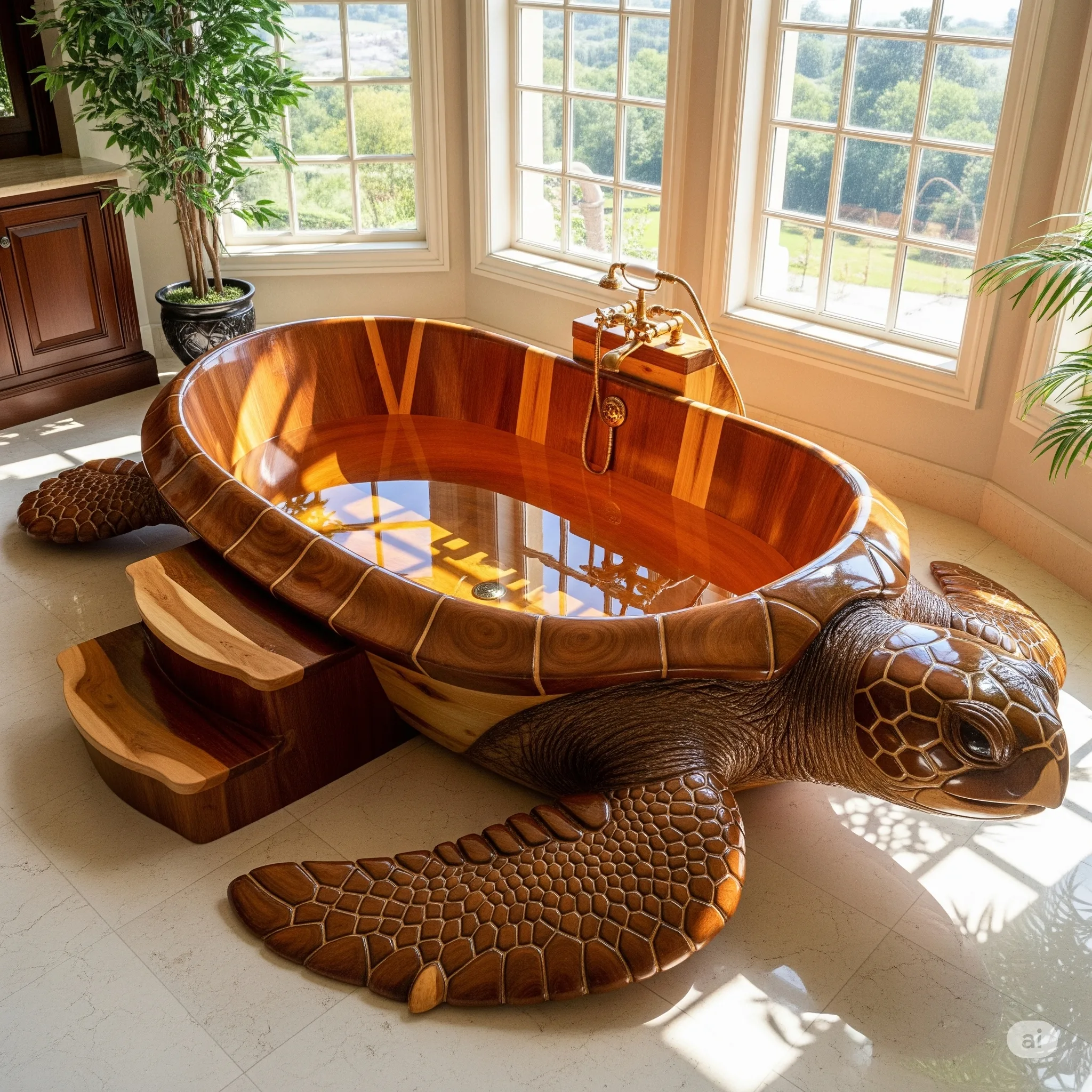
Sustainability & Ethical Sourcing: Wood That Respects the Planet
Because wooden turtle bathtubs are materially significant, sustainable sourcing matters:
- FSC Certification: Choose FSC- or PEFC-certified timber to ensure responsible forest management.
- Reclaimed Timber: Repurposed beams or reclaimed boatwood yield character and reduce new harvesting.
- Local Sourcing: Reduces transport emissions and supports regional artisans.
- Durability Over Cheap Replacement: A well-built wooden tub that lasts decades is more sustainable than disposable alternatives.
Ask makers for provenance documentation and consider lifecycle impacts—and how care and repair can extend an object’s environmental value.
Care, Cleaning & Maintenance: Keeping the Tub Healthy
Maintenance is ongoing but manageable:
- Rinsing & Drying: After use, allow the tub to drain and air dry; for indoor tubs, ventilate bathroom to reduce humidity buildup.
- Routine Wipe & Oil: For oiled finishes, reapply tung or hemp oil per manufacturer’s schedule—often every 6–24 months depending on use.
- Sanitation: Follow the tub maker’s advice on sanitizers. Non-corrosive options, ozone, and UV systems can minimize chemical exposure.
- Refinishing: Over years, a tub may need light sanding and a refresh coat; preserve original lines and repair cracks with compatible fillers.
- Winter Care: In freezing climates, drain and winterize outdoor wooden tubs to avoid ice damage; store pumps and heaters indoors.
- Inspection: Check joints, bands, and hardware annually for movement, corrosion, or looseness.
A maintenance schedule keeps a wooden turtle bathtub both safe and beautiful—and connects the owner to the object in a meaningful stewardship practice.
Safety, Accessibility & Codes
Safety cannot be overlooked:
- Slip-Resistant Steps & Grip: Install textured steps and grab bars; integrate non-slip surfaces on entry points.
- Load-Bearing Verification: Ensure subfloor or deck can support the filled weight; consult structural engineers for large installations.
- Electrical Safety: For heated or jet systems, all electrical work must be performed by licensed electricians with GFCI protection and local code compliance.
- Child Safety: Children should never be left unattended; consider removable covers and temperature-limiting thermostats.
- Local Codes: Some jurisdictions have rules about outdoor hot tubs, wastewater, or plumbing venting—confirm requirements before installation.
Safe design lets you enjoy the ritual without worry.
Styling & Integration: Making the Turtle Feel at Home
The wooden turtle bathtub is a design fulcrum. Styling tips:
- Natural Palette: Pair with stone floors, warm plaster walls, and plants for a spa-like ambiance.
- Contrast Materials: A stainless-steel liner visible at the rim provides a modern counterpoint to warm wood.
- Lighting: Soft, diffused lighting emphasizes grain and curvature; underwater LEDs can create dramatic nocturnal effects.
- Textiles: Plush towels, woven mats, and teak benches enhance tactile layering.
- Landscape Framing: For outdoor tubs, native plantings and privacy screens help the turtle feel embedded rather than toy-like.
Styling should support the tub’s ritual use—quiet, restorative, and sensory.
Cost Considerations: Investment and Value
Custom wooden turtle bathtubs are artisanal pieces—costs reflect materials, labor, and technical integrations:
- Entry-Level Hybrid Models: $5,000–$12,000 for smaller tubs with a metal liner and wooden exterior.
- Handcrafted All-Wood Tubs: $10,000–$40,000 depending on species, size, and finish complexity.
- Large Outdoor Soaking Hot Tubs: $15,000–$60,000 including heating, decking, and insulation.
- Installation & Deferred Costs: Structural reinforcement, decking, plumbing, and electrical add to upfront costs; ongoing maintenance should be factored in.
While pricey, these tubs are often lifetime investments and can significantly increase experiential value for hospitality venues.
Buying Guide & Checklist for Wooden Turtle Bathtubs
- Confirm desired model: all-wood vs. hybrid liner.
- Verify timber species, sustainability certifications, and finish options.
- Ask about waterproofing method and maintenance schedule.
- Review plumbing/heating integration options and required clearances.
- Request structural guidance for floor or deck reinforcement.
- Inspect warranty coverage for tub shell and mechanical systems.
- Visit the maker’s workshop or see installations in person if possible.
- Budget for professional installation, initial sealant application, and long-term care.
- Ensure compliance with local building/plumbing codes.
FAQs: Quick Answers About Wooden Turtle Bathtubs
Q: Are wooden tubs sanitary? A: Yes, when finished and maintained properly; many cultures have centuries of safe use. Use recommended sanitizers and liners if concerned.
Q: Do wooden bathtubs leak? A: Properly built and sealed tubs do not leak. Traditional stave tubs rely on wood swelling; hybrids with liners are near-absolute.
Q: Can I have jets or heaters? A: Yes—external pumps and inline heaters can be integrated, but avoid exposing wood to continuous chemical contact.
Q: How long do they last? A: With care, decades. Some historic wooden tubs survive generations.
Q: Are they eco-friendly? A: They can be—choose certified or reclaimed wood and durable construction that reduces replacement cycles.
Why Wooden Turtle Bathtubs Are the Perfect And Unique Choice
A wooden turtle bathtub is a convergence of symbolism, craftsmanship, and bathing practice. It offers tactile warmth that acrylic or steel cannot replicate, a sculptural focal point that changes how a room reads, and a ritual that encourages slowing down. Whether you prioritize the pure, sensory joy of an all-wood interior, the practical ease of a hybrid liner, or the dramatic hospitality pull in a hotel suite, wooden turtle bathtubs deliver a unique mix of meaning and utility. They ask for a relationship—periodic care, thoughtful use, and a willingness to embrace natural materials—and in return they give back a long-lasting sanctuary: a shaped refuge where water, wood, and human presence meet. For those who want a bathtub that is both functional and fabulously distinct, the wooden turtle bathtub is not merely an option; it is the perfect and unique choice.